Every Pilgrim, Payment and Passport — One Connected Platform
An all-in-one Laravel platform for Hajj and Umrah travel agencies that unites a content-managed marketing website, a full administrative control centre, and self-service portals for staff, agents and pilgrims.

Get This App
Download the guide, request this app for your business, or talk to us about a sale or customization.
Multi-Platform Views
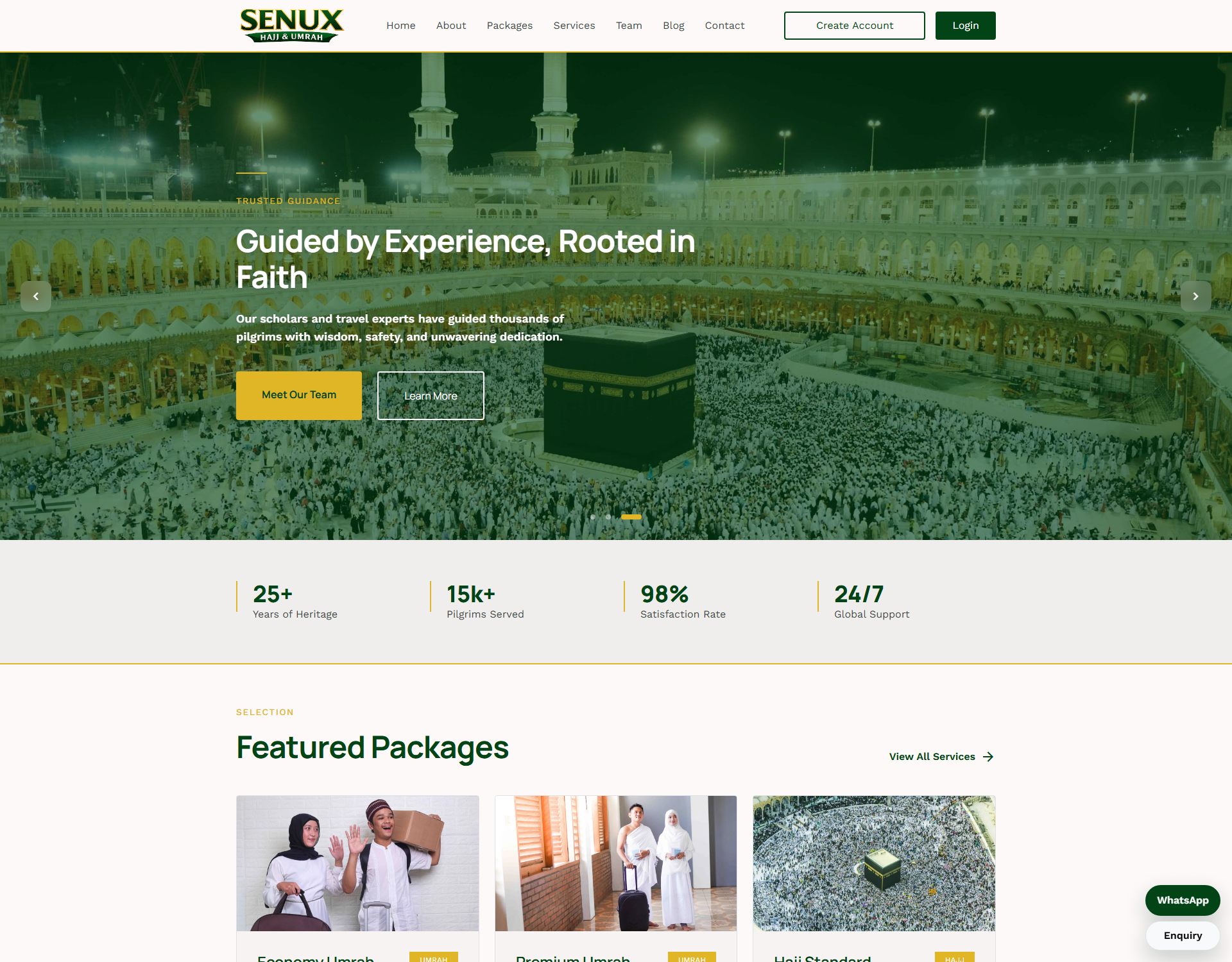
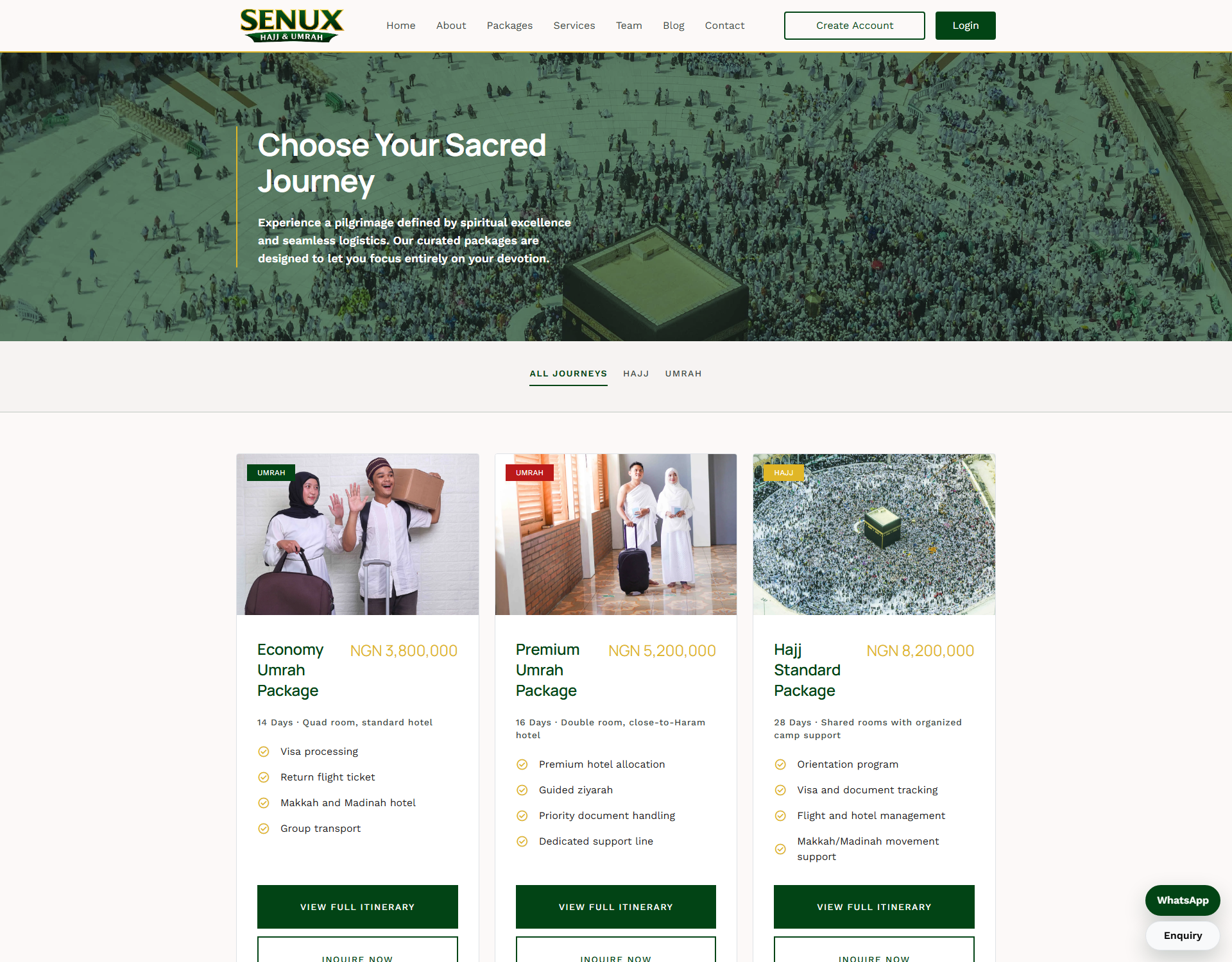
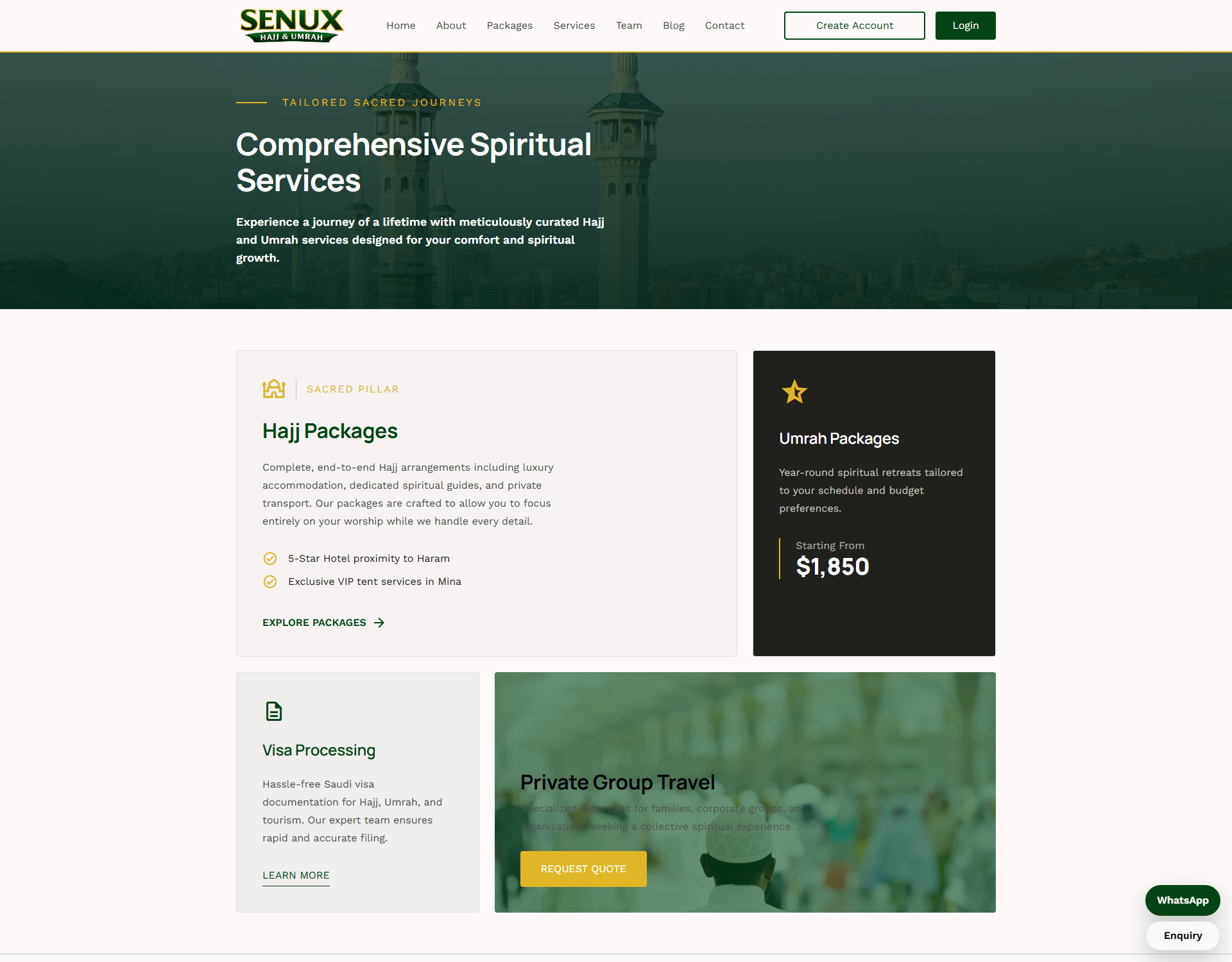

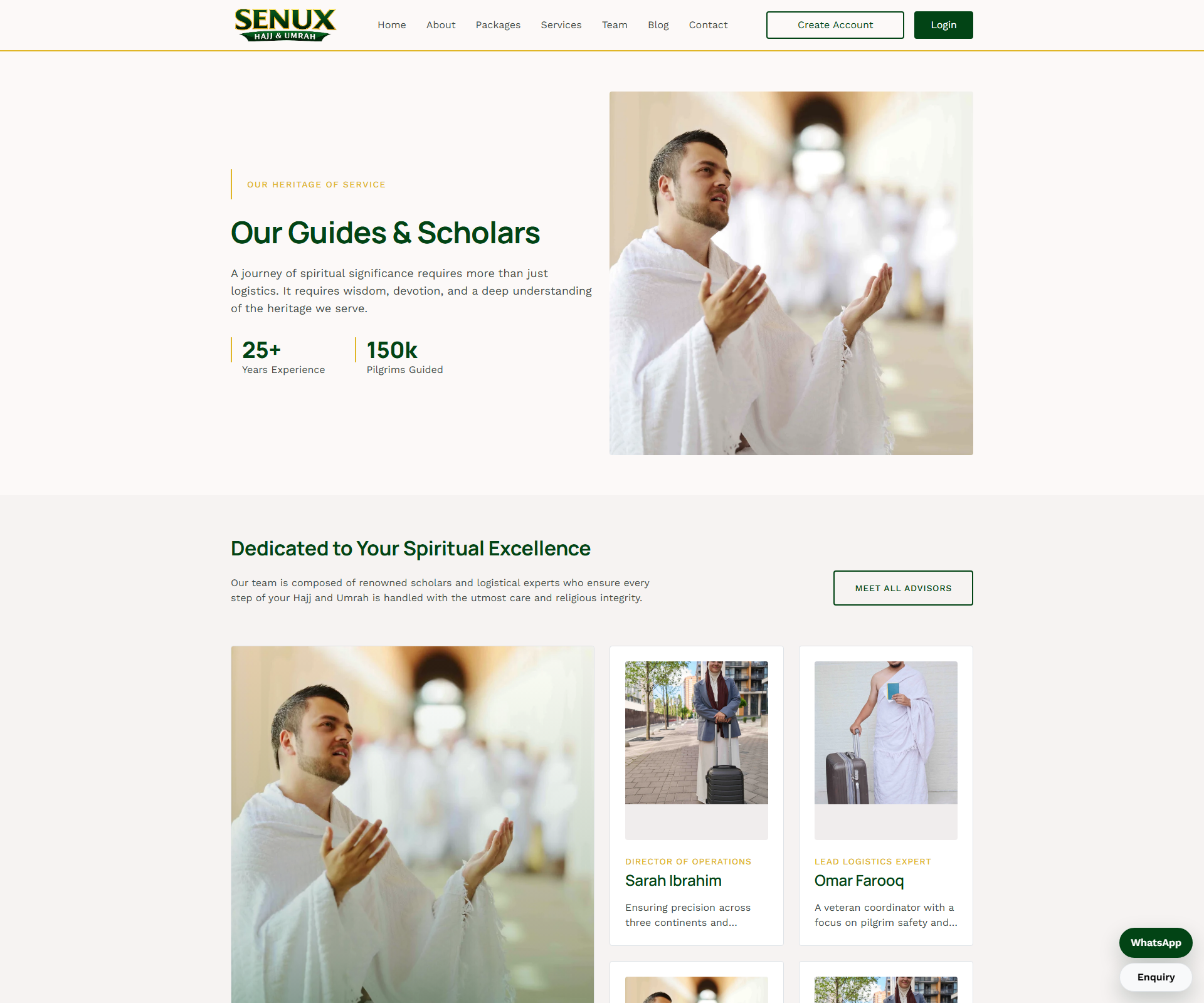
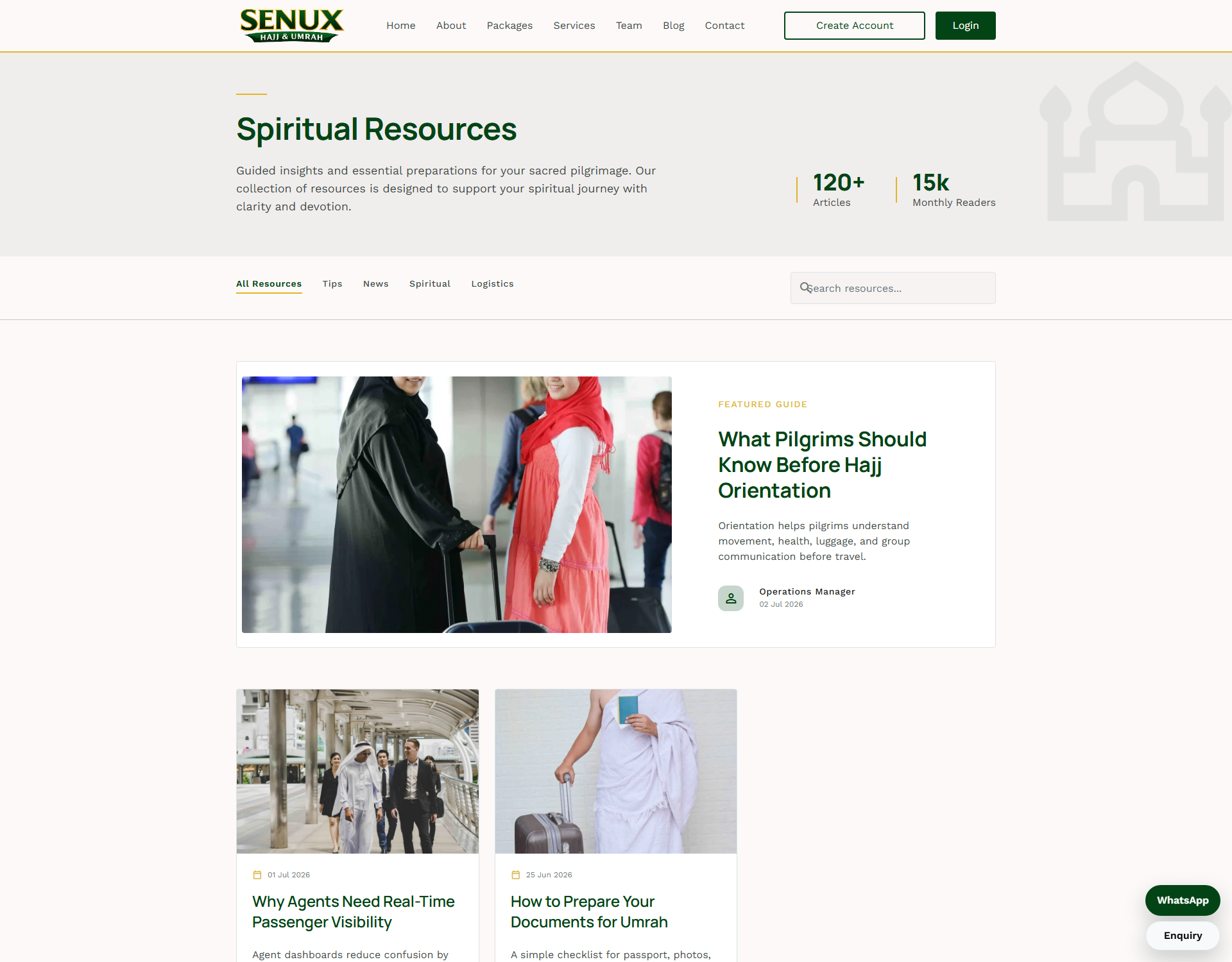
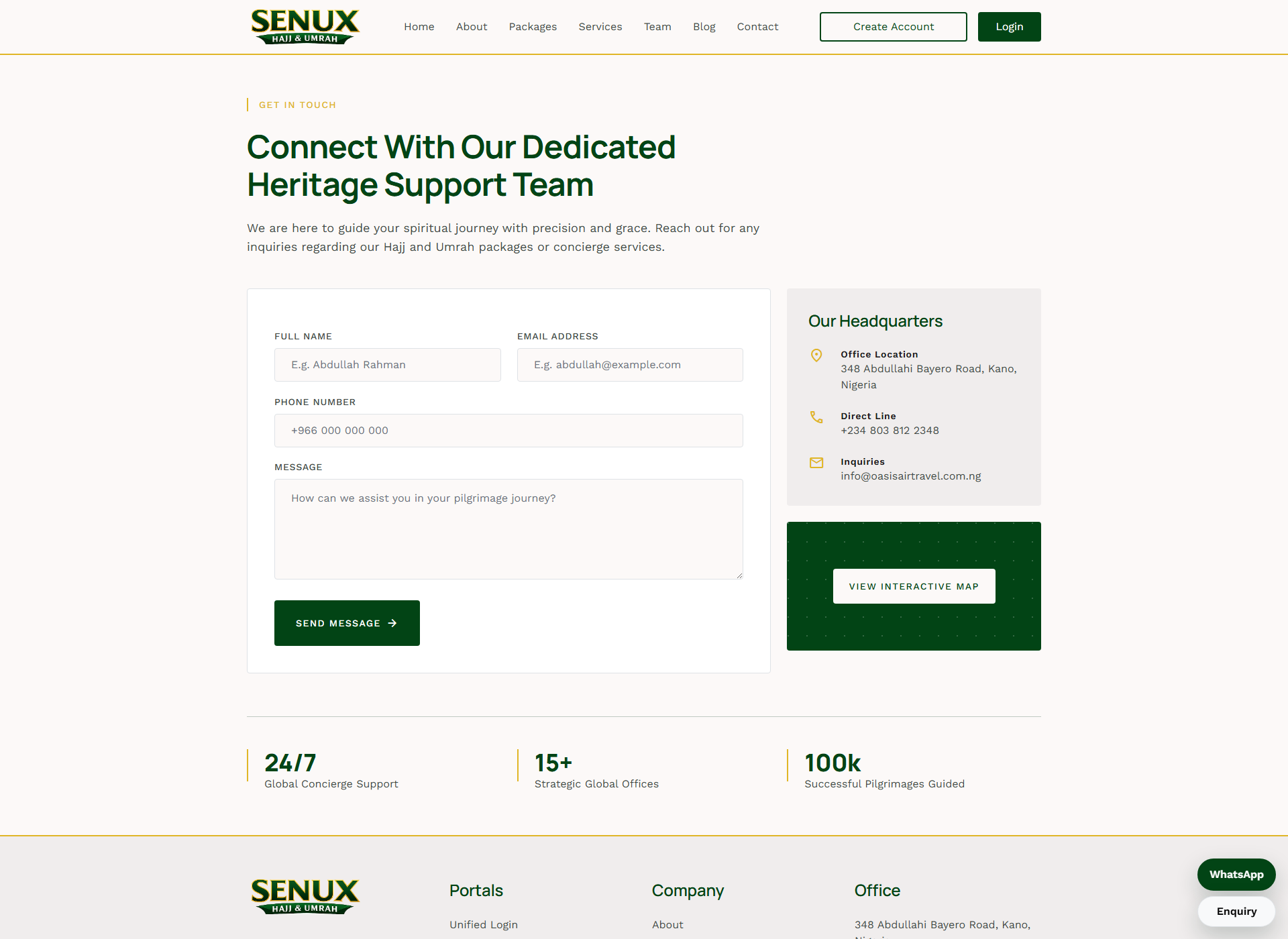
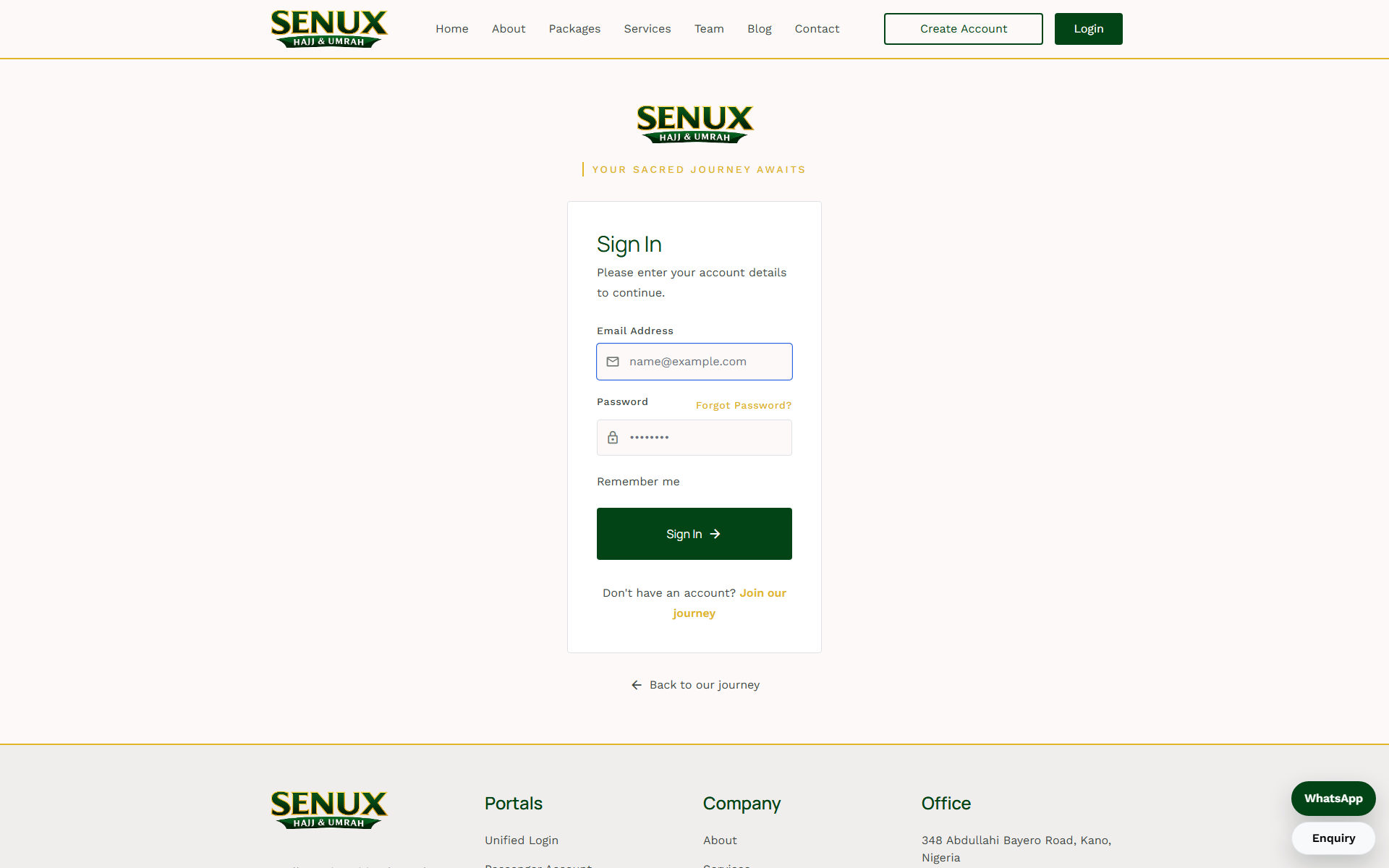
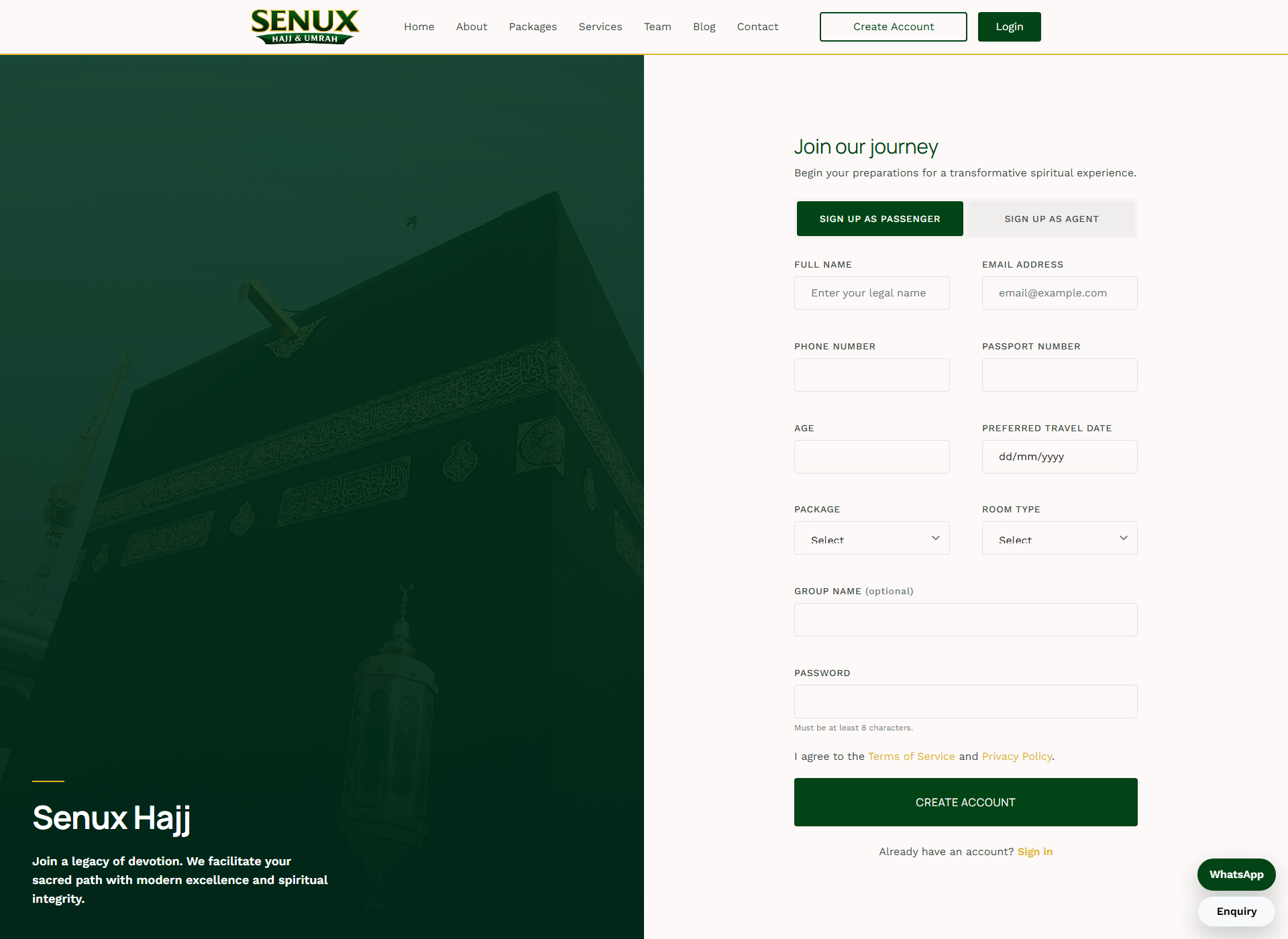
About This App
The Senux Hajj & Umrah Travel Management System is a complete, ready-to-deploy software platform for travel agencies that organise Hajj and Umrah pilgrimages. Organising pilgrimages is complex and time-sensitive, and most operators run on scattered spreadsheets, paperwork and phone calls. This system replaces all of it with one organised platform where every pilgrim, payment, document, hotel and flight is tracked in a single place — and where agents and pilgrims can serve themselves through their own secure portals.
It is built for Hajj and Umrah travel agencies, religious tour operators, pilgrimage organisers working with agent networks, and travel start-ups that want a professional online presence backed by a genuine back-office system rather than a brochure site. The platform ships as five connected experiences: a public marketing website, an admin panel, and dedicated Staff, Agent and Passenger portals.
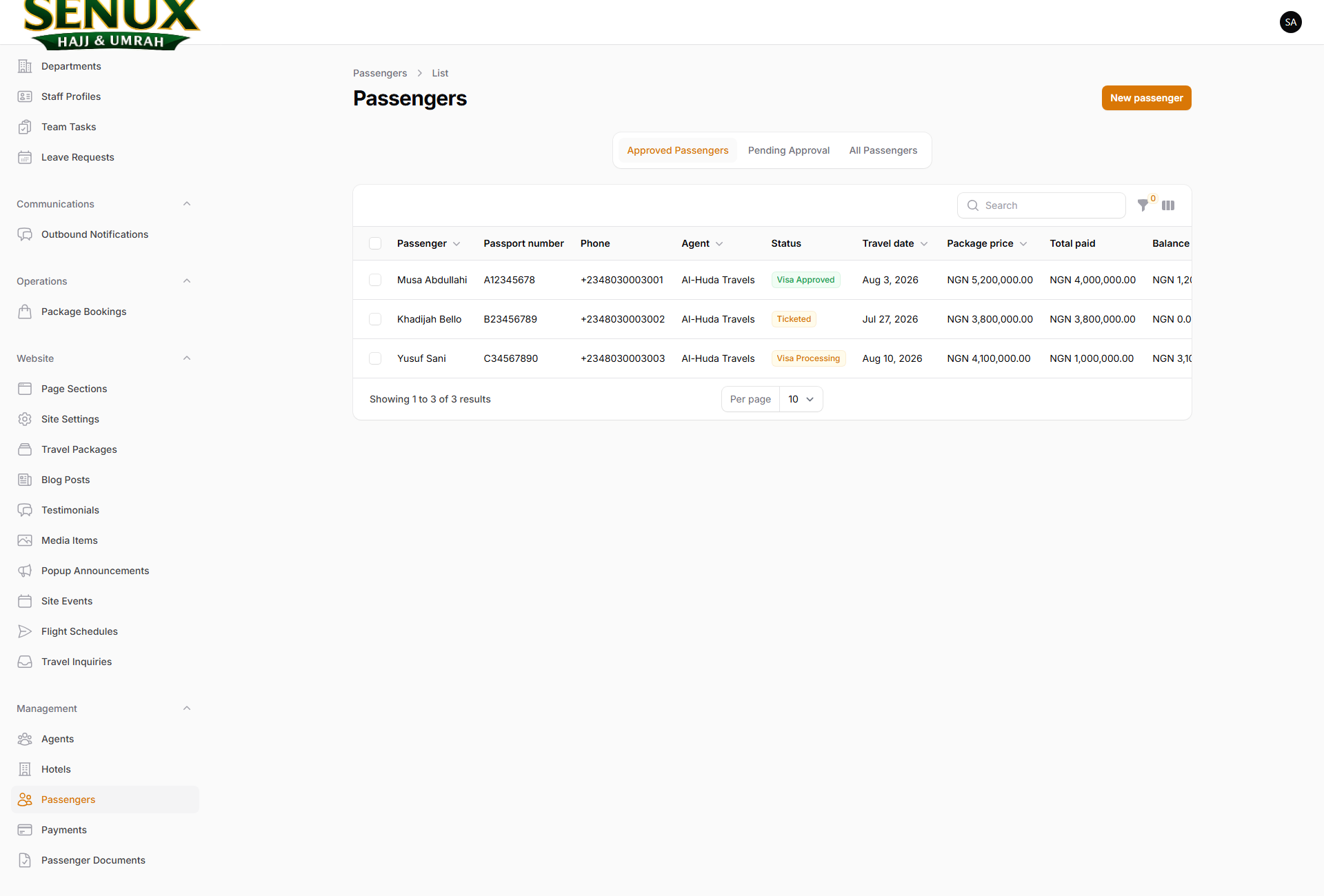
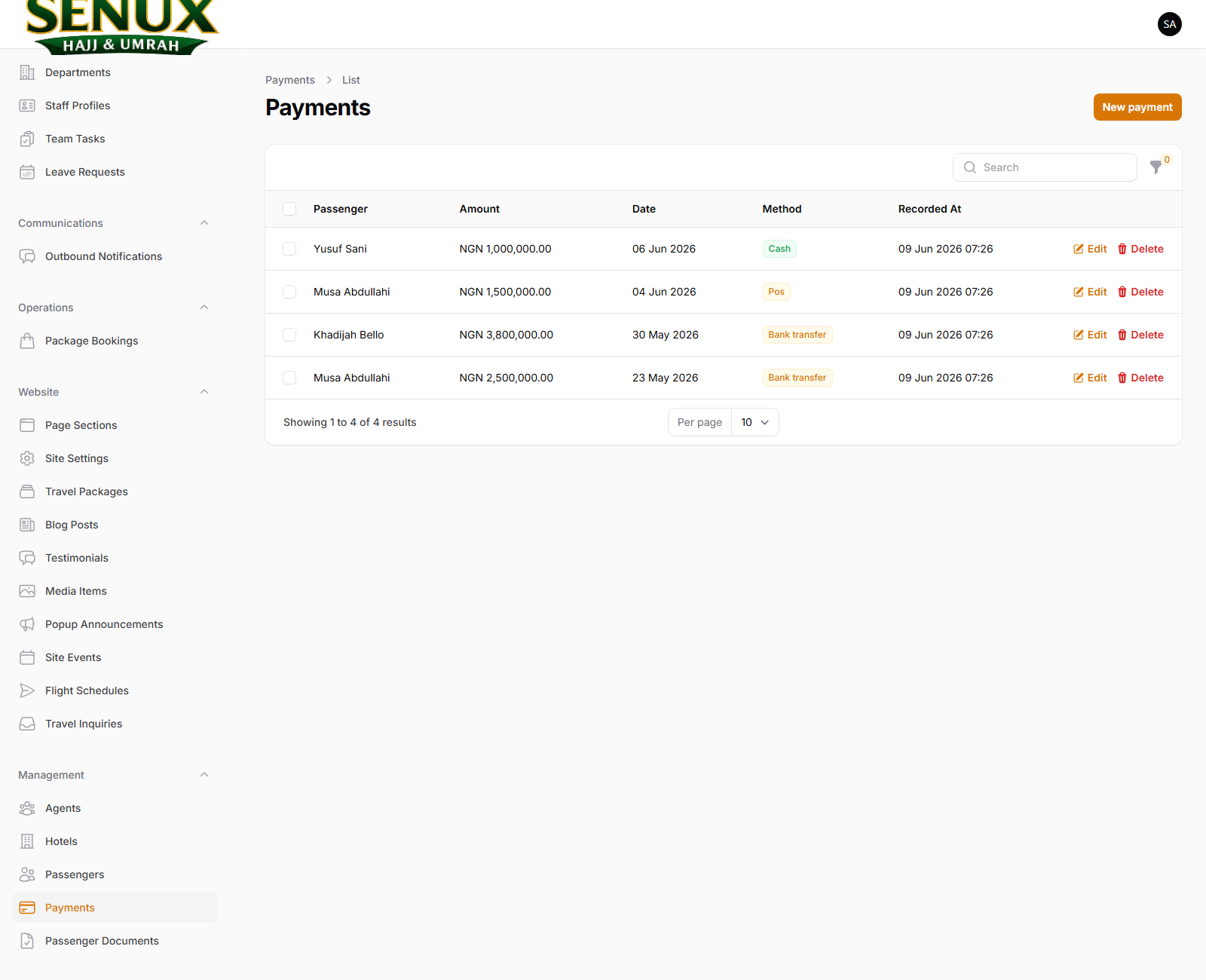
At the operational core is pilgrim management. Each passenger record carries passport details, package, Makkah and Madinah hotel allocation, flight, group and status. Payments are recorded against the passenger and balances and payment status calculate automatically, so outstanding collections are never a matter of guesswork. Document tracking follows passports, visas, vaccination records, tickets and more through their full lifecycle from required to verified, giving operations staff a live view of who is genuinely ready to travel.
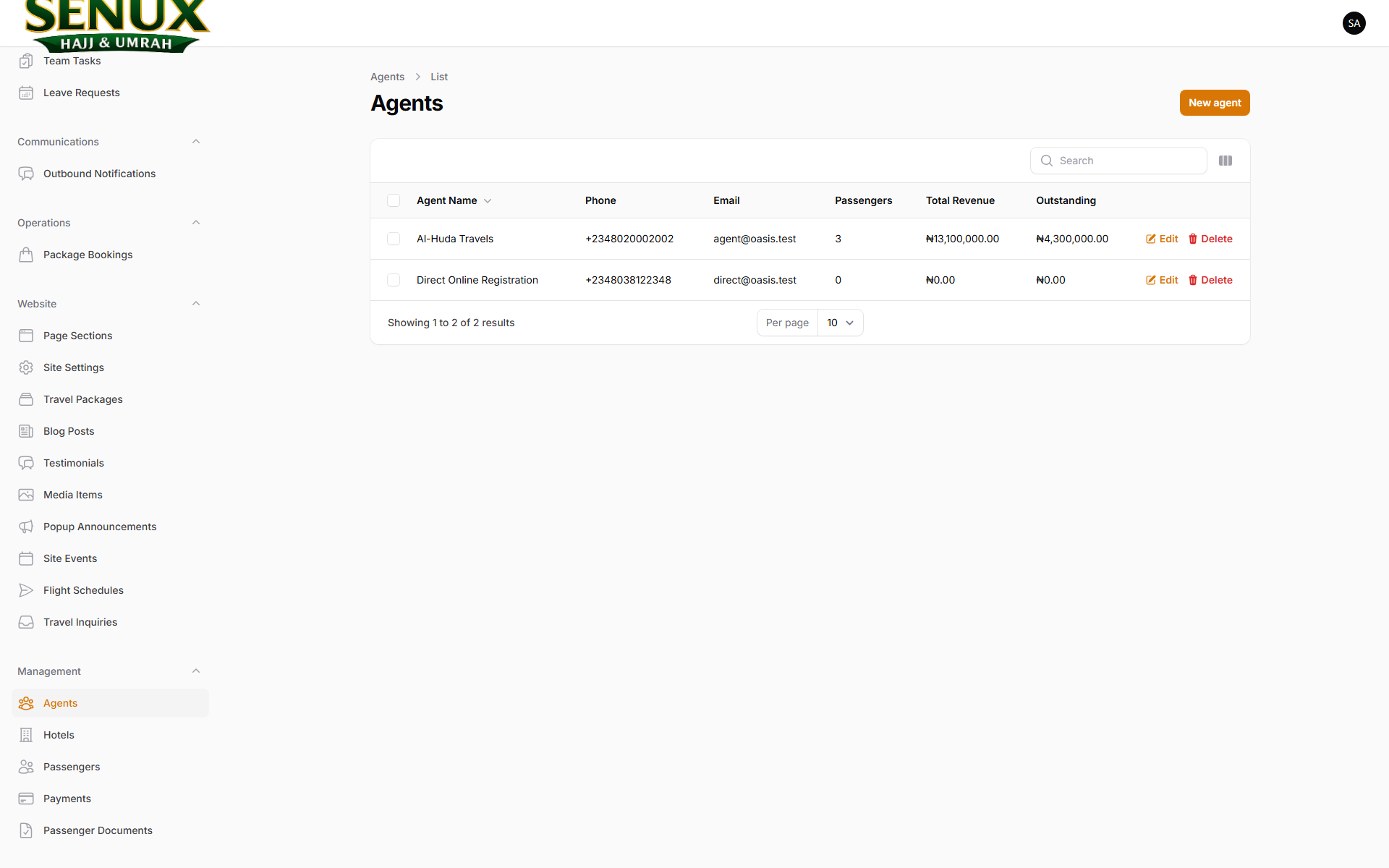
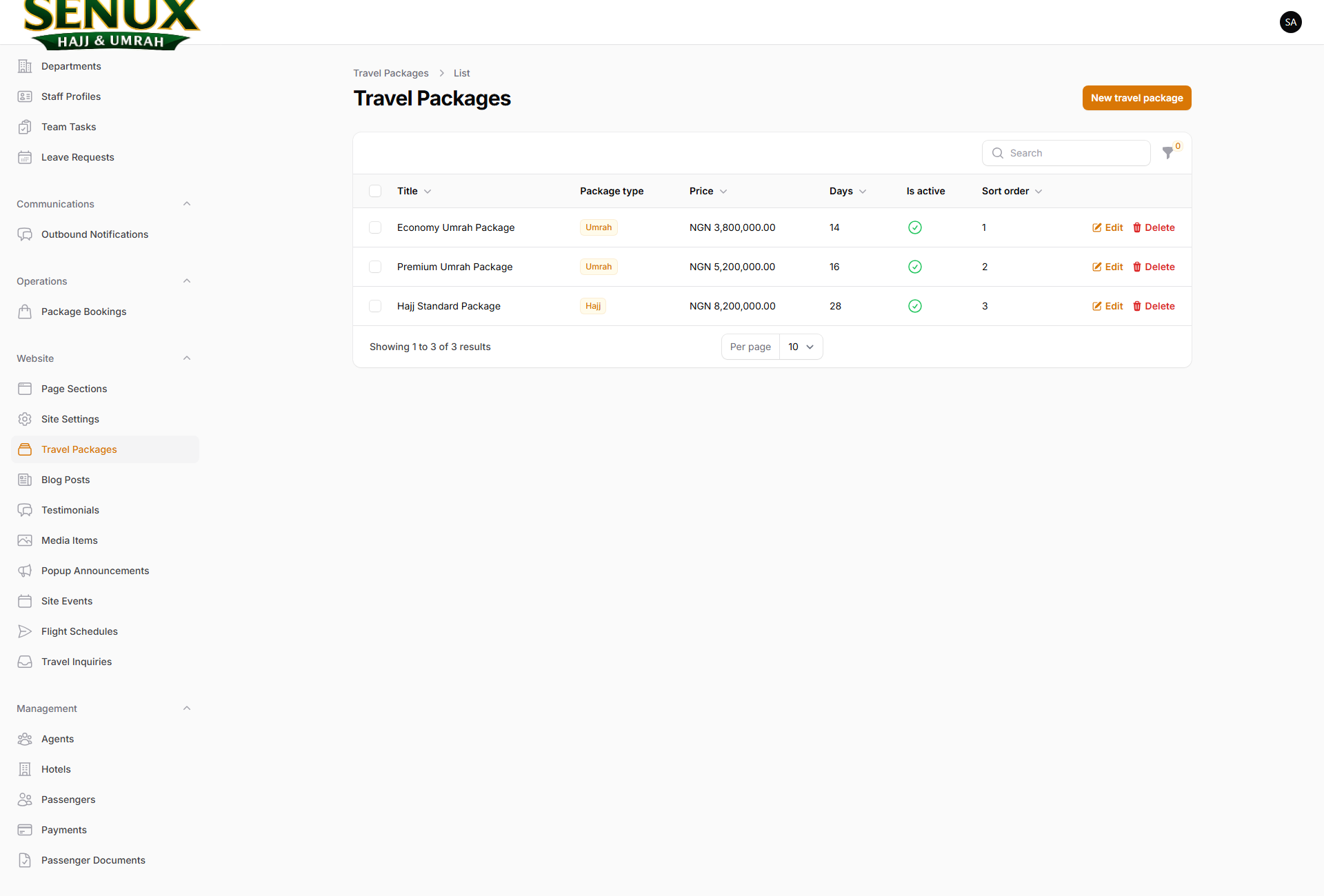
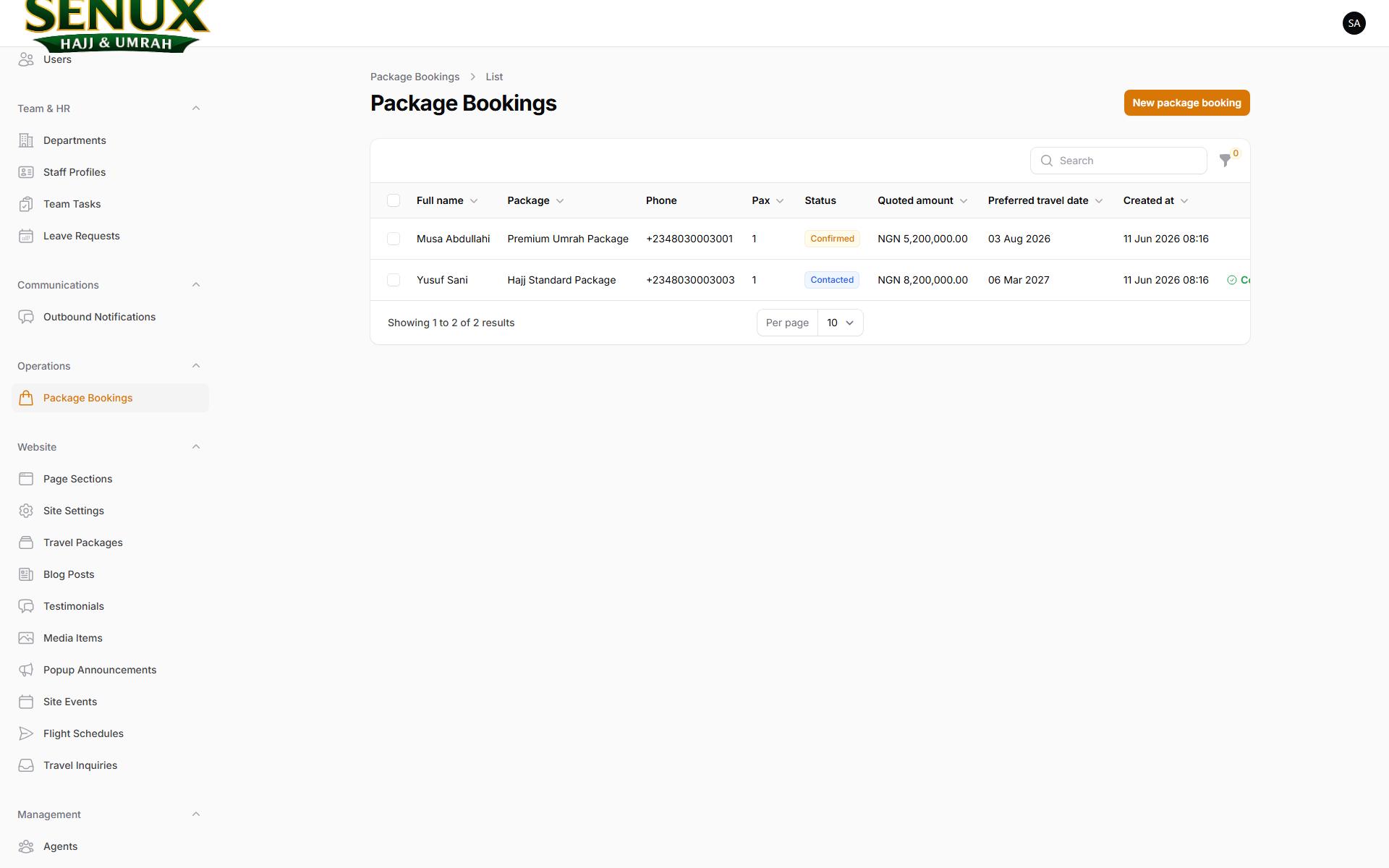
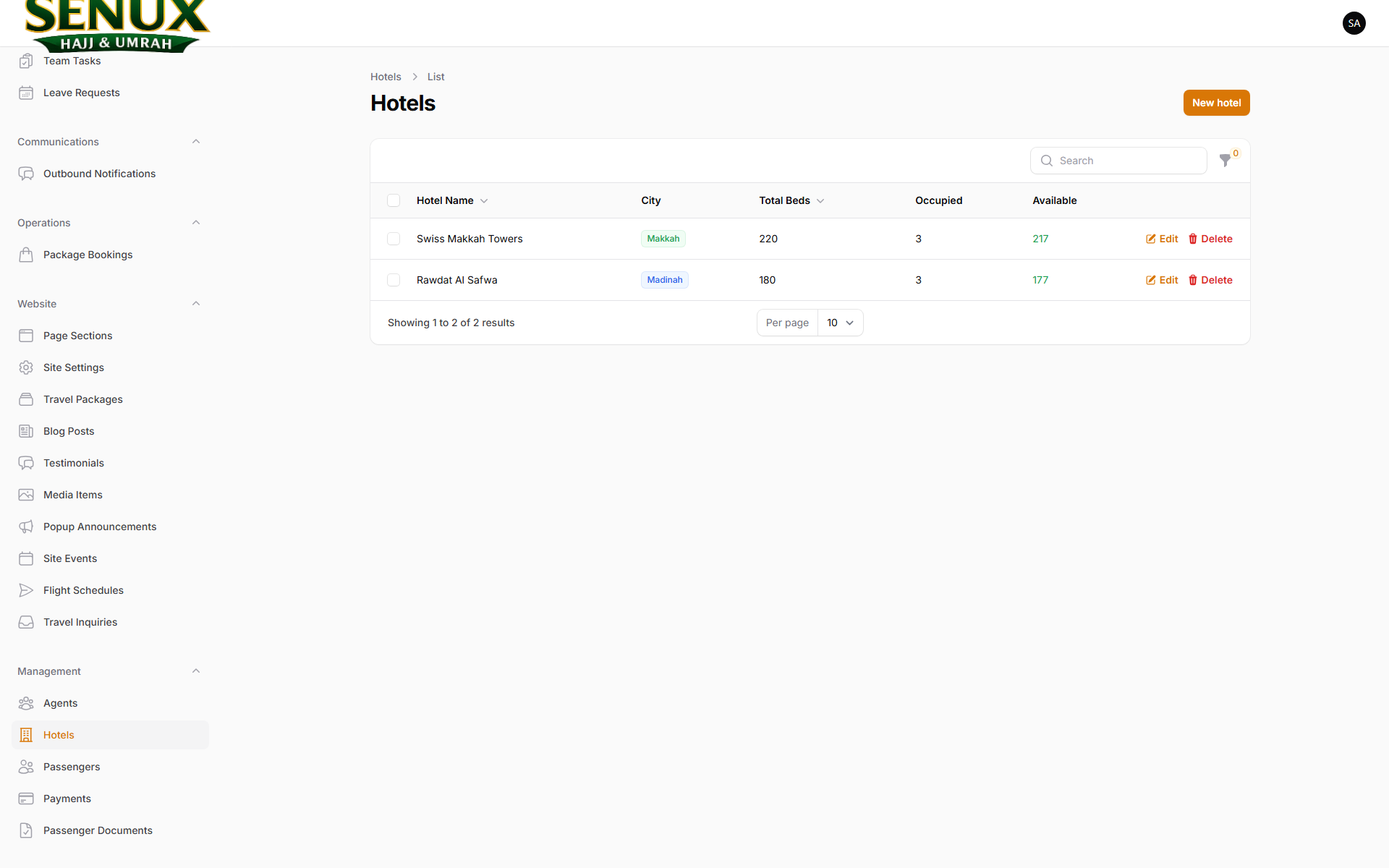
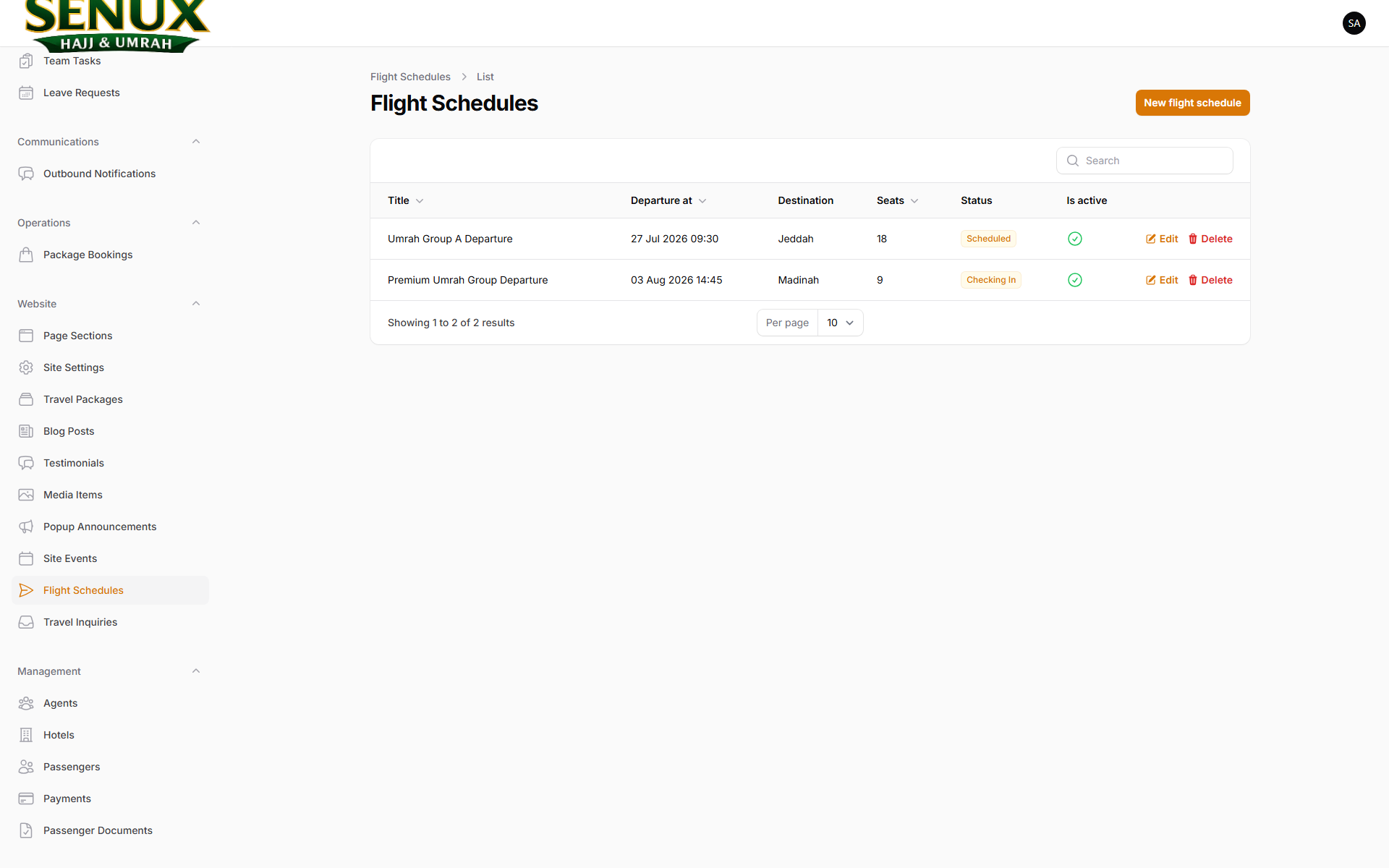
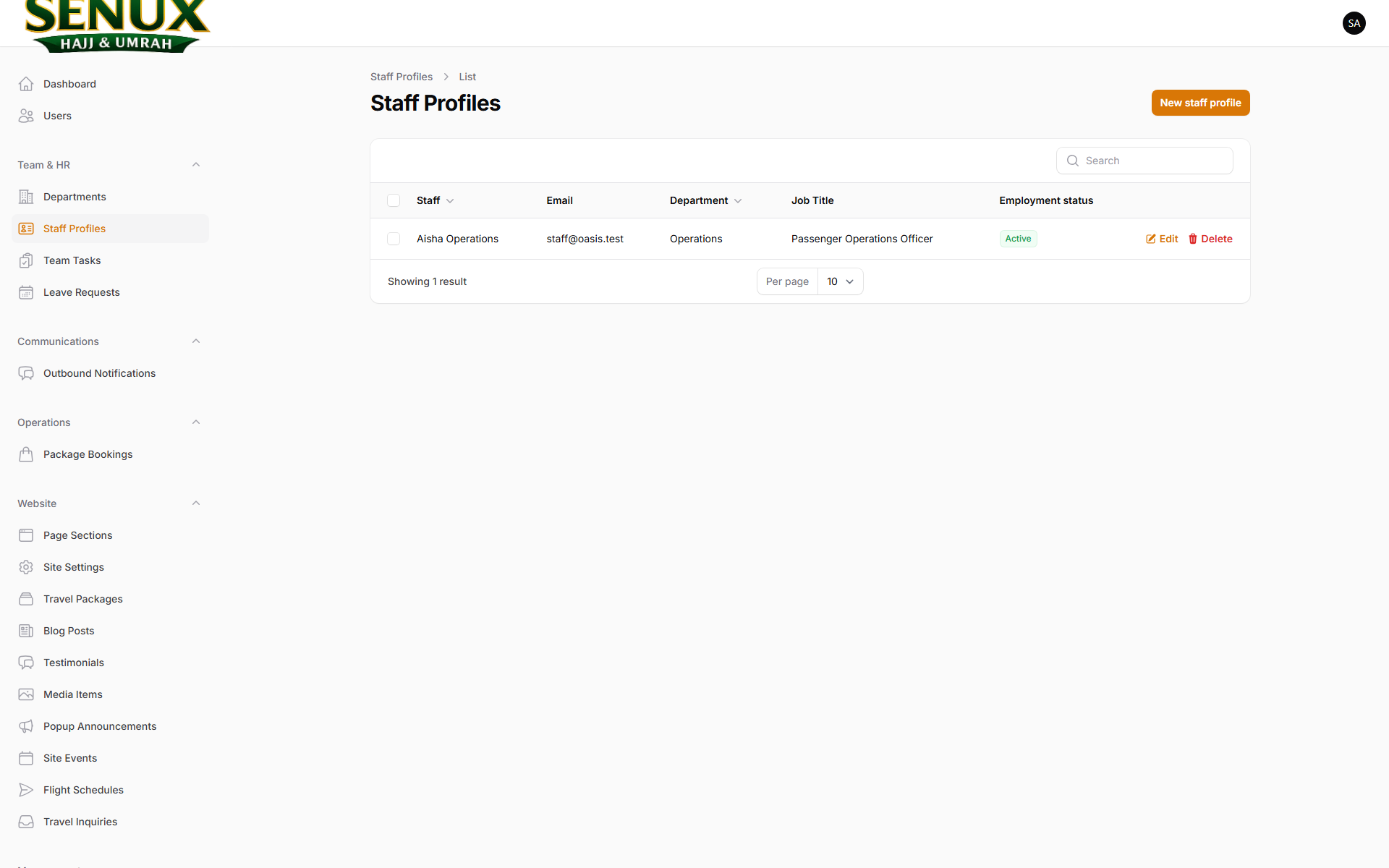
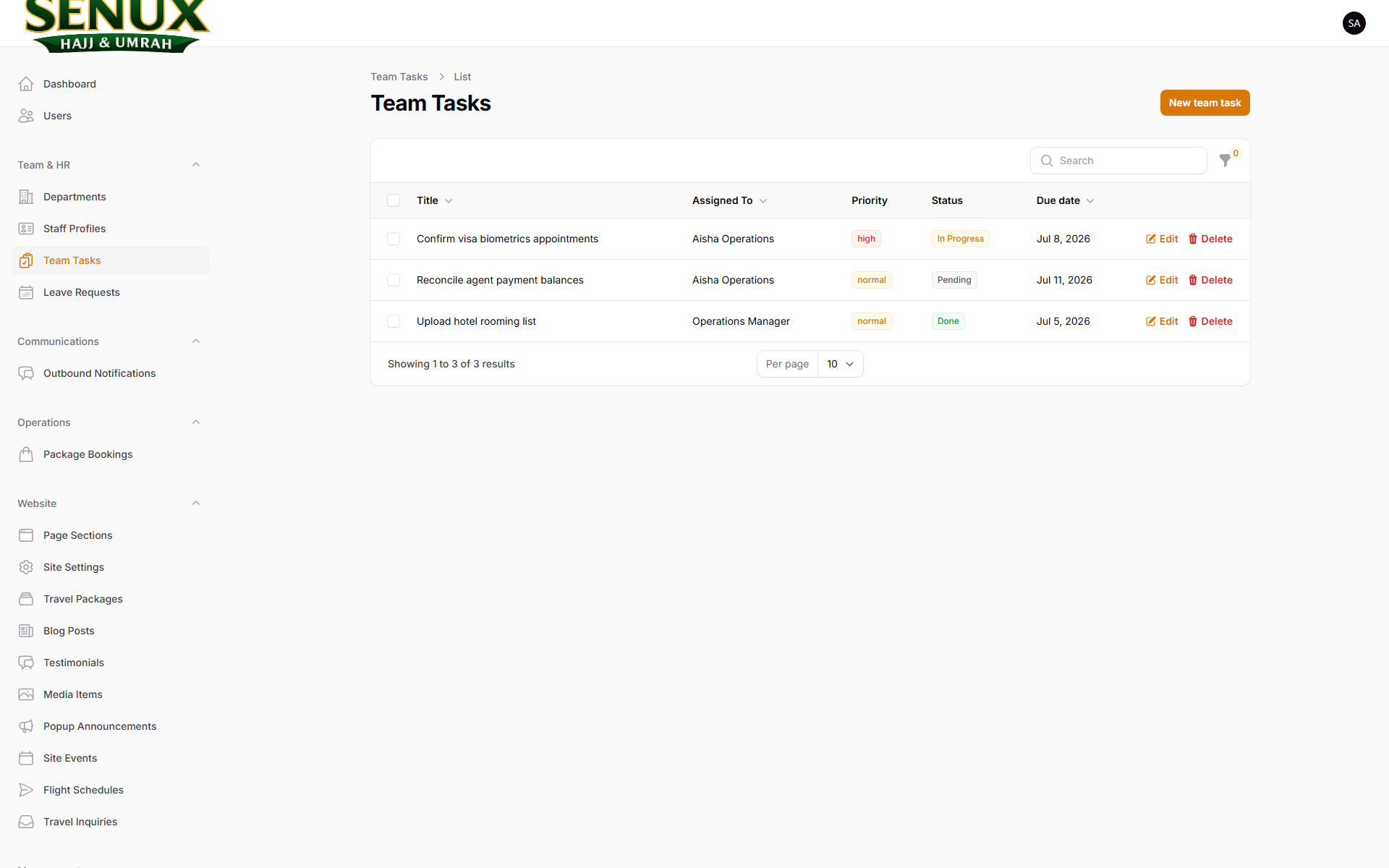
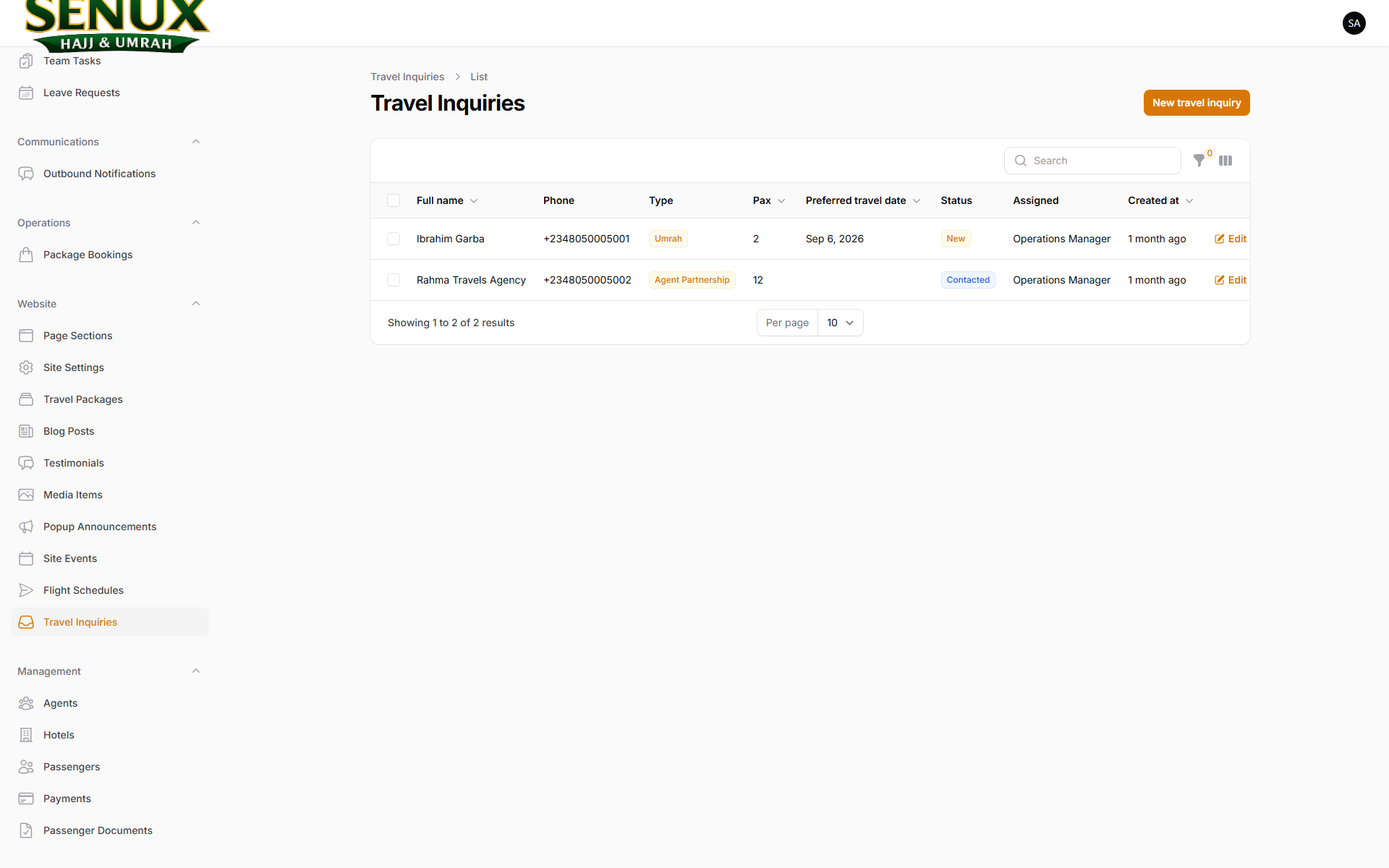
The surrounding modules complete the picture. Hotels are managed with bed capacity across Makkah and Madinah; flight schedules cover departures, airlines, seats and status. Travel packages are published to the website with pricing, duration and features, and the bookings and quotes they generate flow straight back into the admin as Package Bookings. Website enquiries land as Travel Inquiries with assignment and status. A partner agent network is managed centrally, with each agent given a private portal scoped to their own pilgrims and collections. Internal operations are covered too, through Departments, Staff Profiles, Team Tasks with priority and status, and Leave Requests.
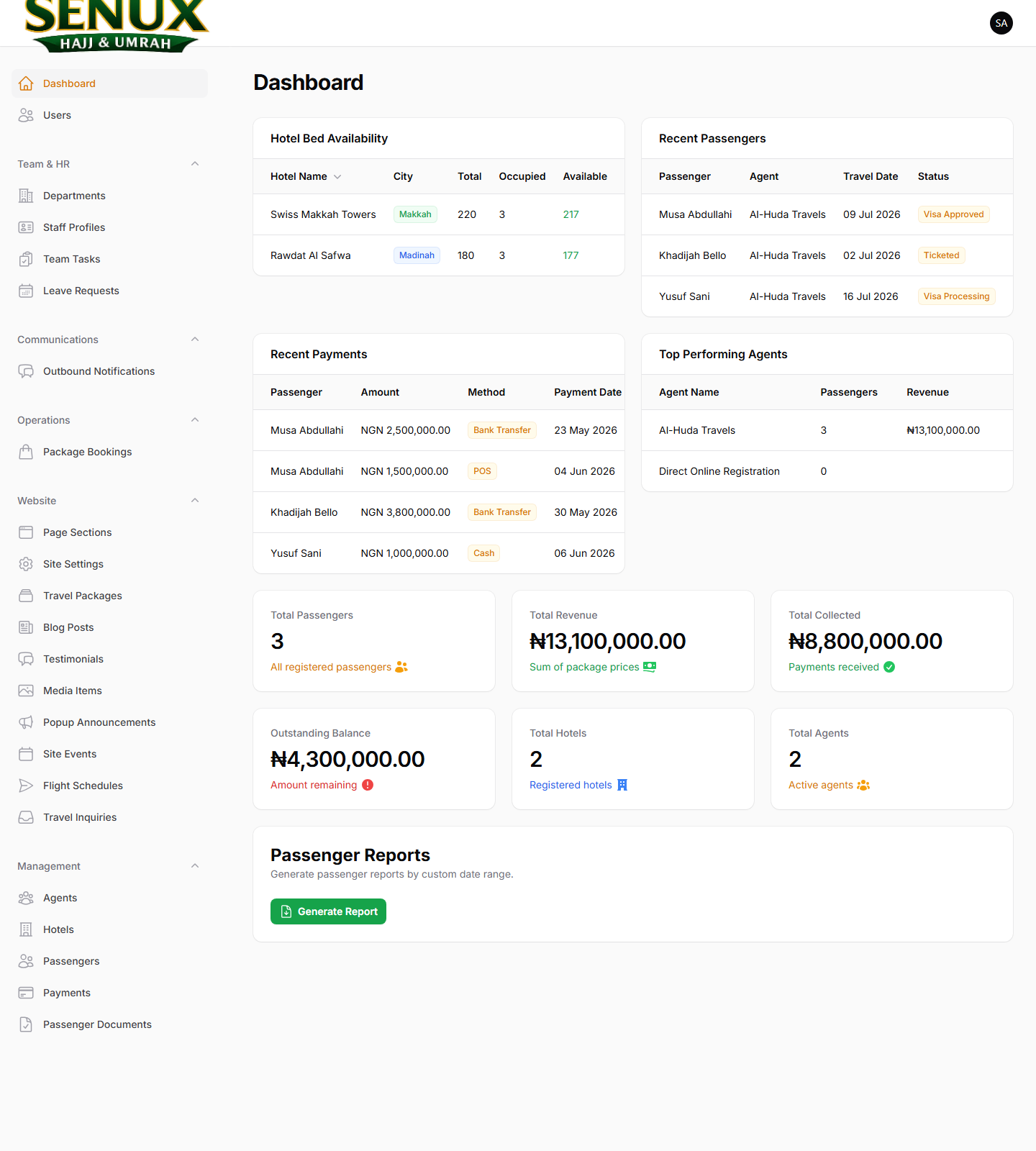
The admin panel is the control centre. Its dashboard surfaces live statistics and recent activity through purpose-built widgets — Stats Overview, Recent Passengers, Recent Payments, Top Agents, Hotel Availability and Export Report — alongside date-range passenger reporting. Every management area is a full create, read, update and delete module with search, filters and pagination. Passengers gain a dedicated Pending Approval tab with a one-click Approve action, plus print and PDF export, while passenger lists can be exported to Excel.
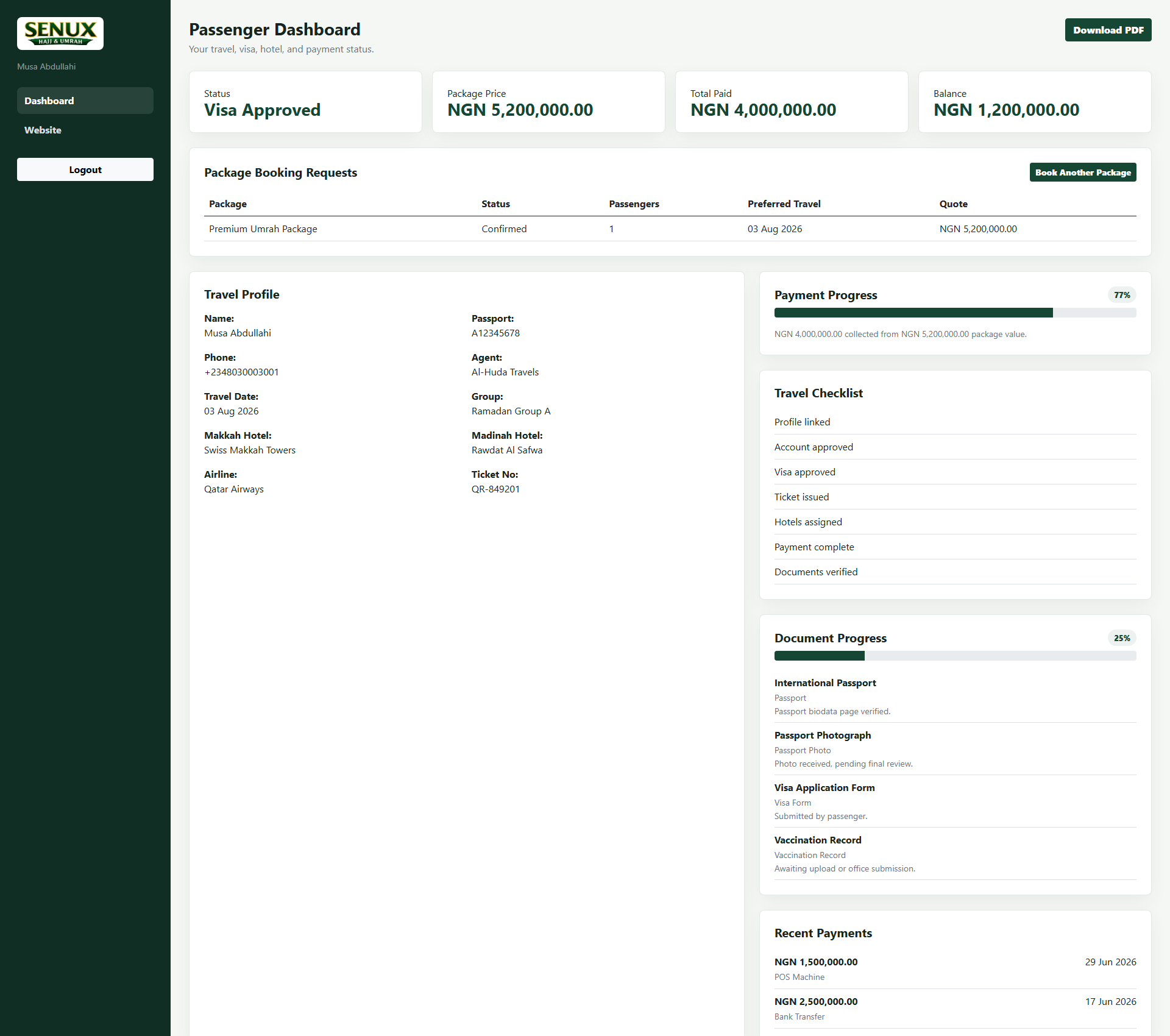
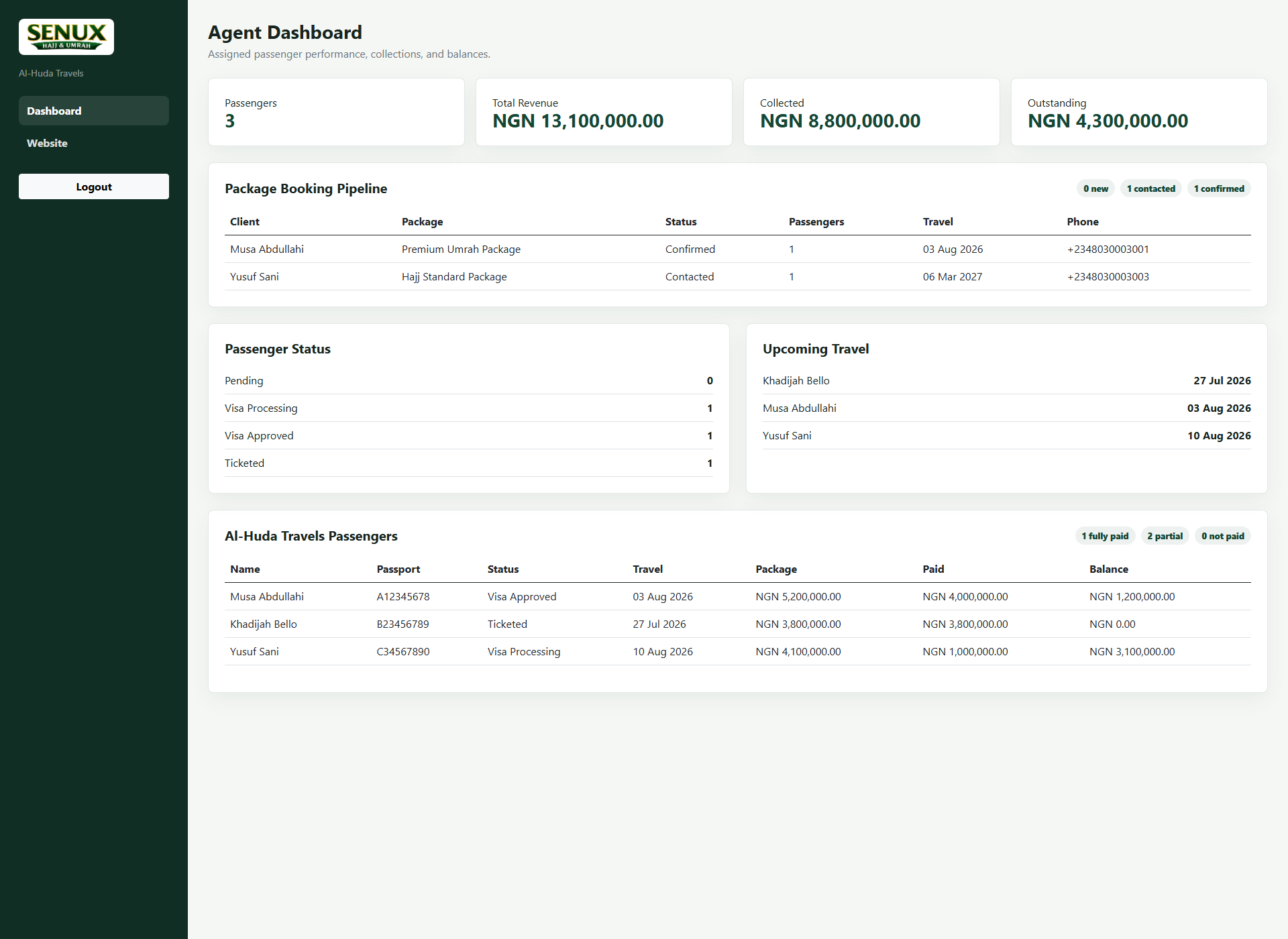
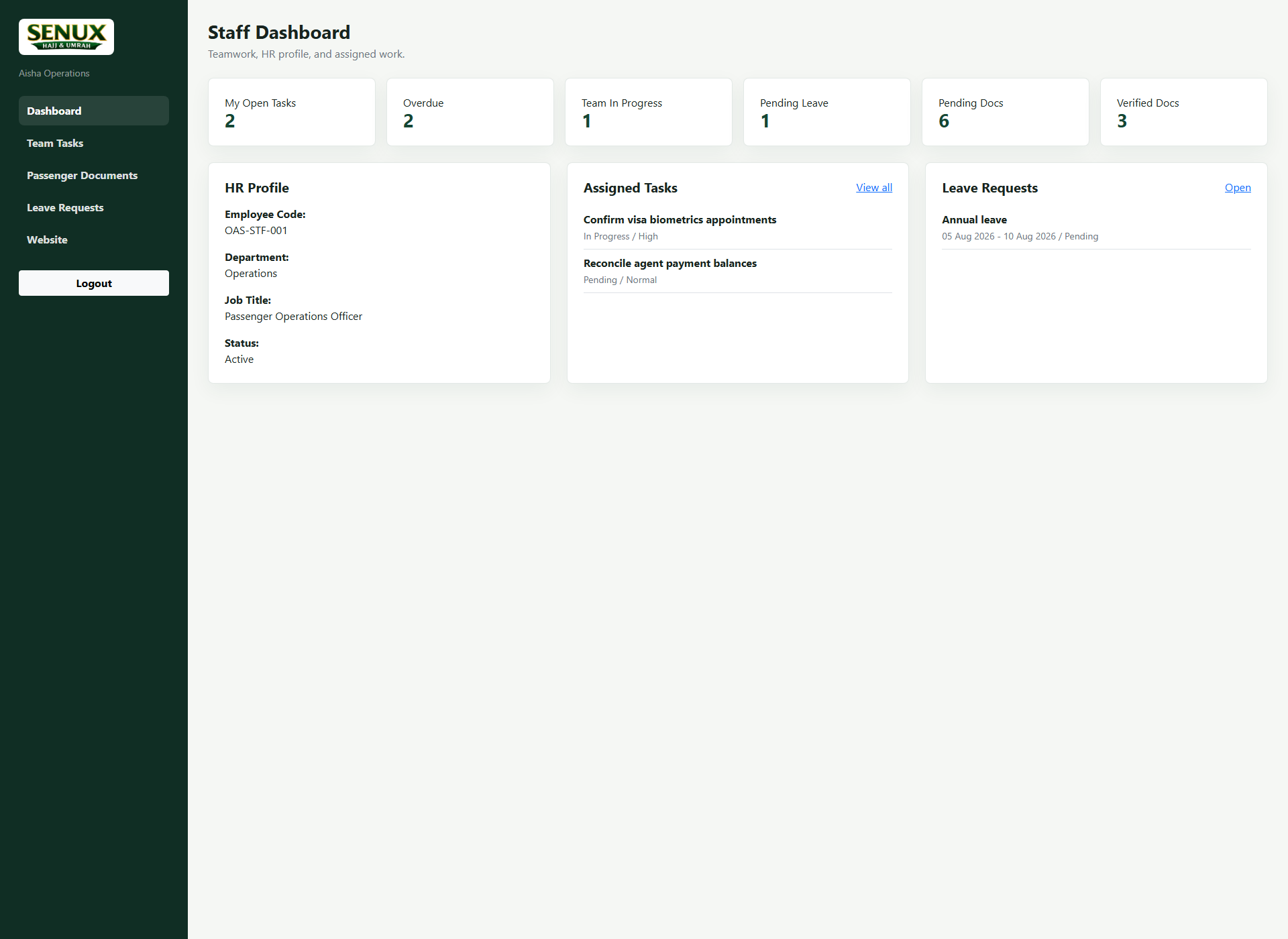
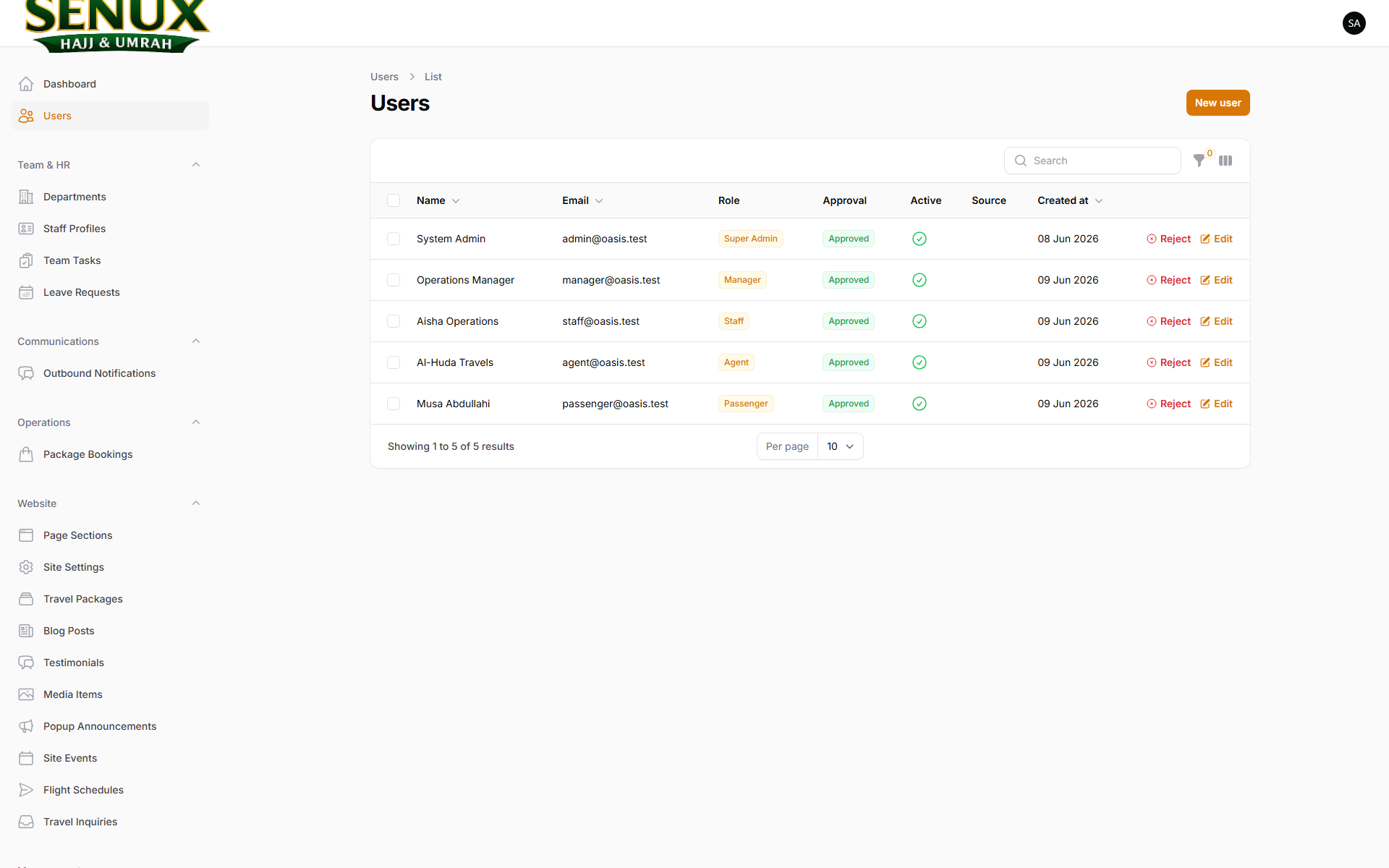
The three self-service portals remove the phone calls. The Passenger Portal gives each pilgrim their personal travel status, payment progress, travel checklist, document progress and payment history, with PDF download. The Agent Portal shows an agent their own pilgrims, collections and outstanding balances. The Staff Portal handles task management, passenger document handling and leave requests. Access is gated by the EnsurePortalRole middleware, so every user sees only their own area. Online registration for pilgrims and agents enters a pending-approval queue and becomes active only once an administrator approves it.
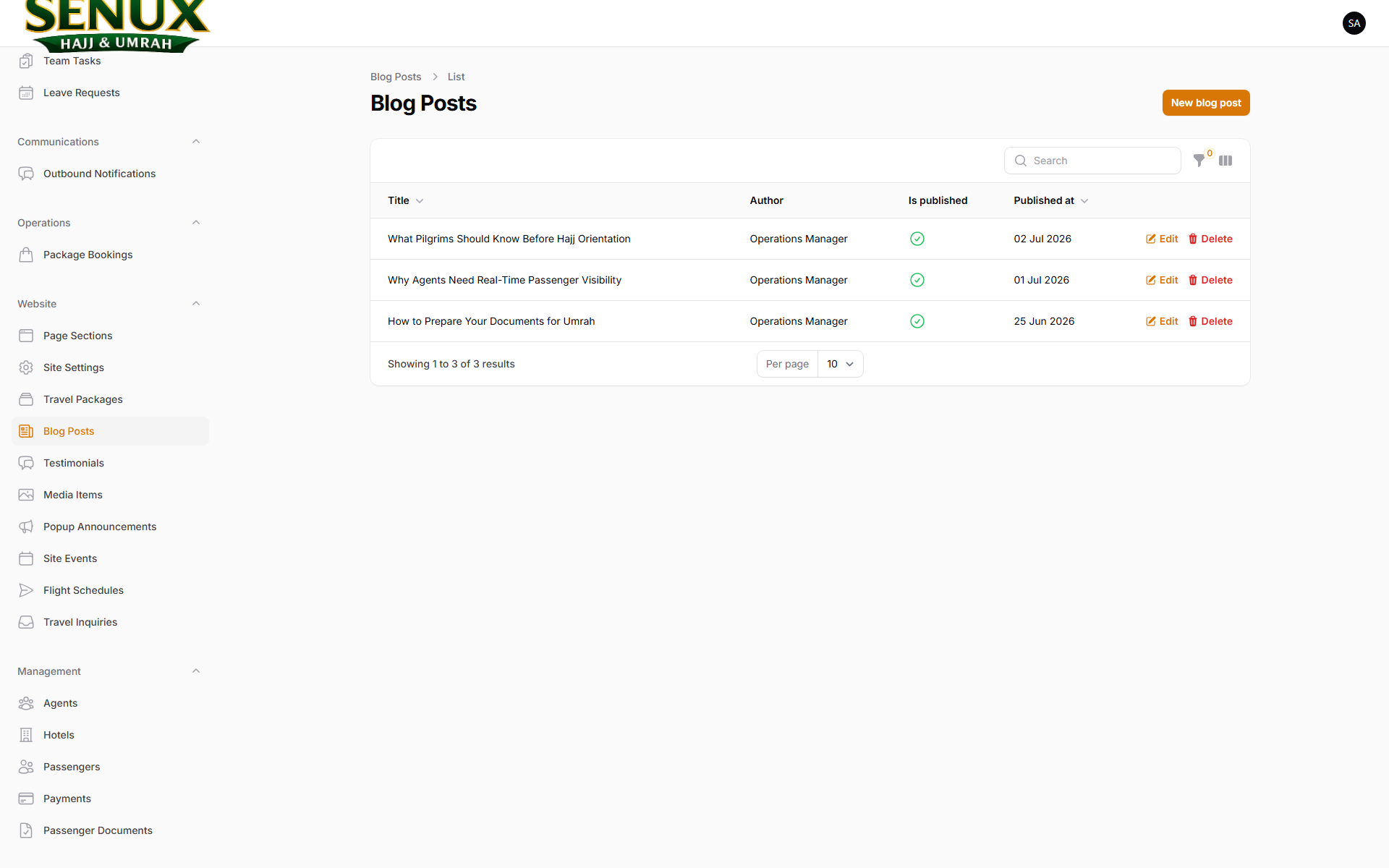
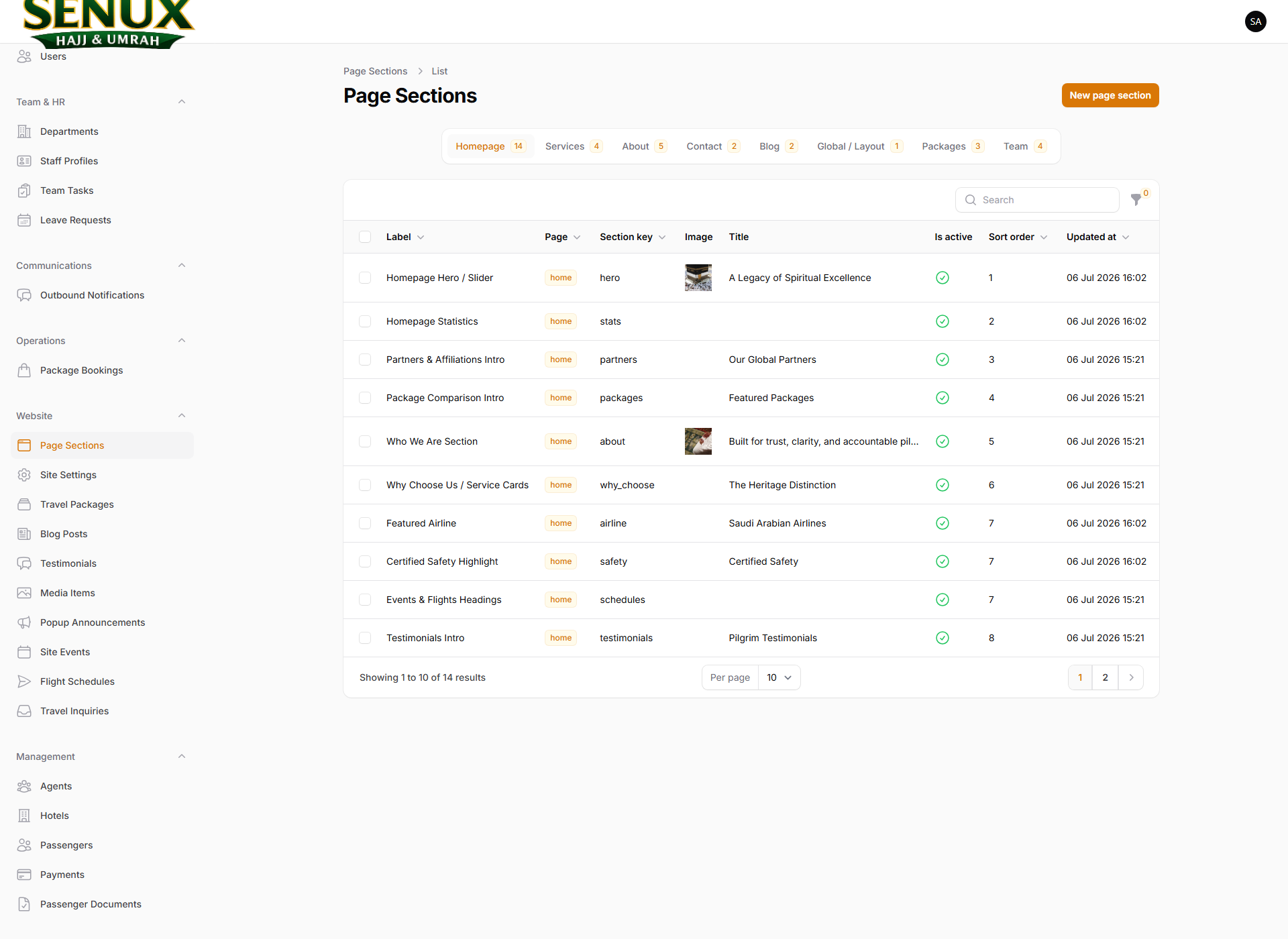
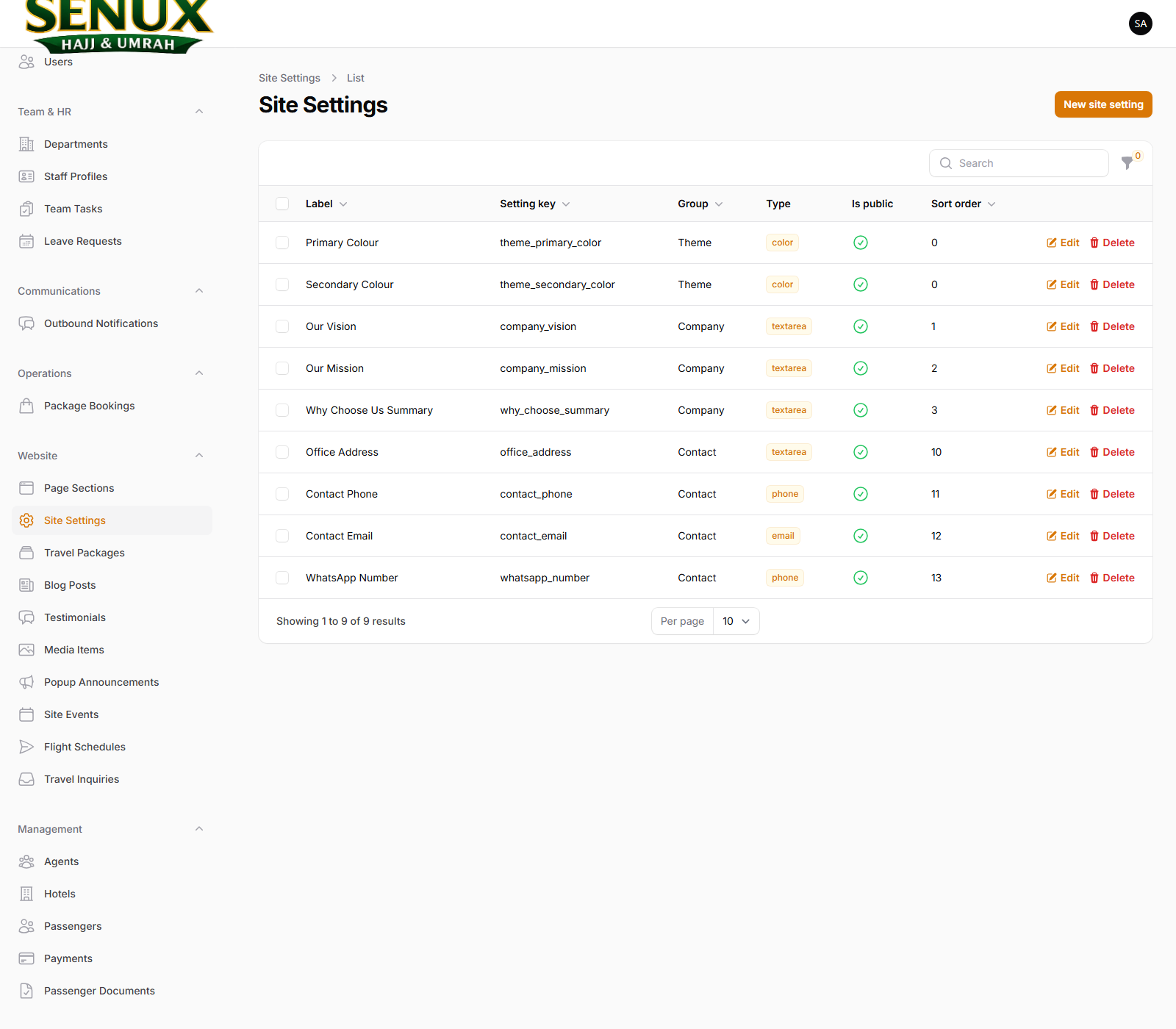
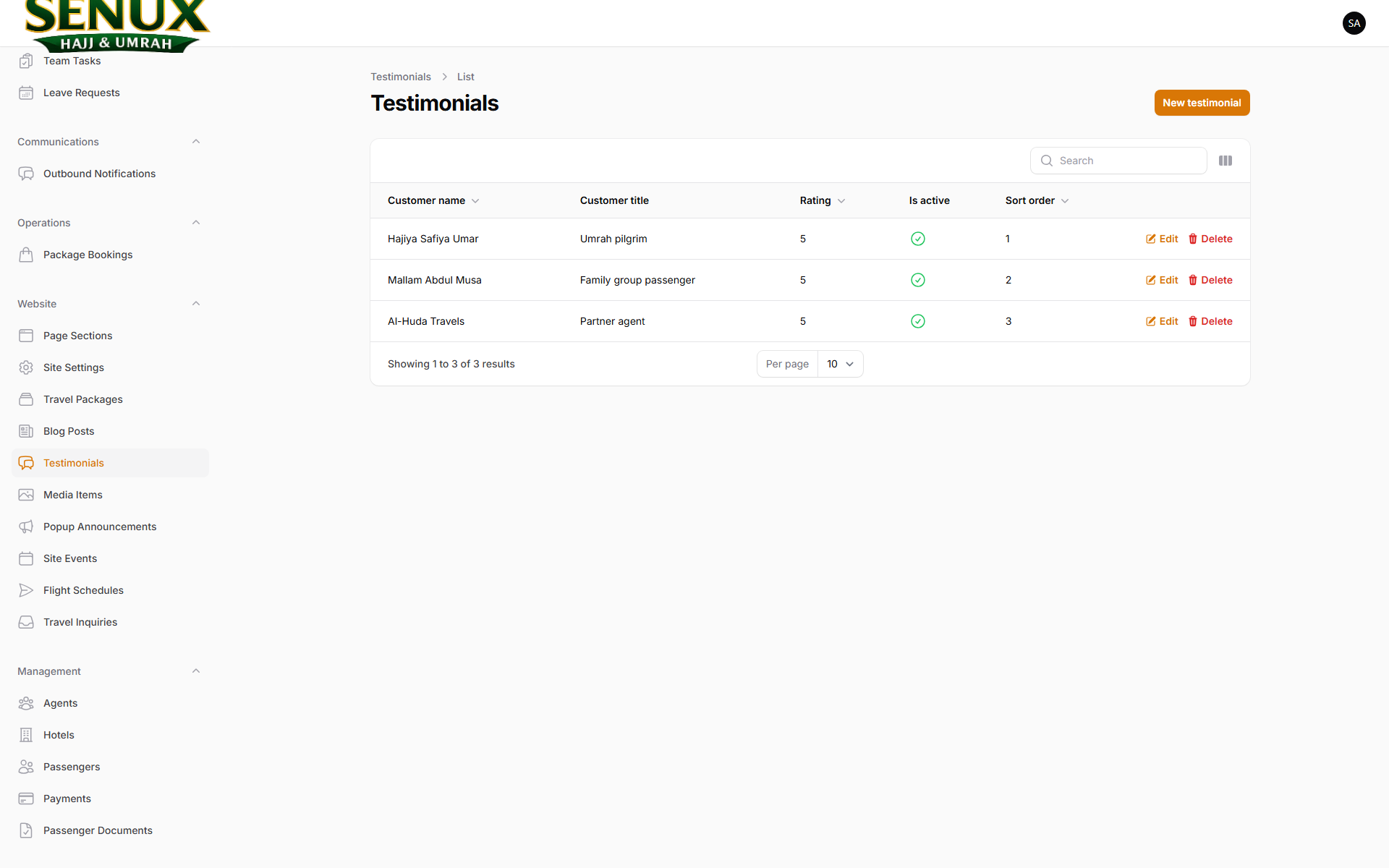
Branding and content are entirely in the operator's hands, with no developer required. Site Settings carries brand colour pickers, company details and contact information, so the platform is rebrandable in minutes. Page Sections gives section-by-section control of every page on the website, including the multi-slide hero slider, alongside Blog Posts, Testimonials, Site Events, Popup Announcements and Media Items. Five roles — Super Admin, Manager, Staff, Agent and Passenger — are enforced throughout with Spatie Laravel Permission, giving each user a tailored, permission-controlled experience.
How It Works
1. Brand and configure — the operator sets primary and secondary colours, company details and contact information in Admin → Site Settings, then shapes every website section and hero slider slide in Admin → Page Sections.
2. Publish the offer — Hajj and Umrah packages are created in Travel Packages with price, duration and features, and appear on the public /packages listing with filters; blog posts, testimonials and team profiles fill out the marketing site.
3. Capture demand — visitors book or enquire through the per-package booking form, submit the contact enquiry form, or subscribe to the newsletter, landing in the admin as Package Bookings, Travel Inquiries and Newsletter Subscriptions.
4. Register and approve — pilgrims and agents sign up online at /register/passenger and /register/agent; accounts enter a Pending Approval state and an administrator activates them via the Passengers module's Pending Approval tab and one-click Approve action.
5. Build the pilgrim record — staff complete the passenger record with passport details, package, Makkah and Madinah hotel allocation, flight, group and status, drawing on the Hotels module's bed capacity and the Flight Schedules module's departures, airlines and seats.
6. Collect and reconcile — payments are recorded in the Payments module against each passenger, and balances and payment status recalculate automatically; the dashboard's Recent Payments and Top Agents widgets track collections across the agent network.
7. Clear the documents — passports, visas, vaccination records and tickets are tracked in Passenger Documents from required through to verified, with staff processing them through the Staff Portal's document handling.
8. Let everyone self-serve — pilgrims sign in at /passenger/login for travel status, payment progress, travel checklist and document progress with PDF download, while agents sign in at /agent/login to see their own pilgrims, collections and outstanding balances.
9. Report and export — administrators run date-range passenger reports from the dashboard, export passenger lists to Excel via /export-passengers, and produce per-passenger PDFs or printable sheets for manifests and records.
Let's Build Your Business Solution
Transform your operational efficiency with SENUX. Our experts are ready to map your requirements to a powerful architecture.
Frequently Asked Questions
What exactly is included in the platform?+
Five connected experiences in one system: a public marketing website, a Filament-based admin control centre, and three self-service portals for staff, agents and pilgrims. The guides document 22 admin management modules, 23 data models, 123 application routes and 48 page templates.
Who is this built for?+
Hajj and Umrah travel agencies, religious tour operators, pilgrimage organisers working with agent networks, and travel start-ups that want a professional online presence backed by a full back-office system.
Can we change the branding and website content ourselves, without a developer?+
Yes. Primary and secondary brand colours plus company and contact details are set with colour pickers in Admin → Site Settings, and every website section — including the multi-slide hero slider — is edited in Admin → Page Sections. The guides describe the system as brandable in minutes.
How does payment tracking work?+
Payments are recorded against each passenger in the Payments module, and balances and payment status are calculated automatically. The admin dashboard adds Recent Payments and Top Agents widgets, and each pilgrim sees their own payment progress and payment history in the Passenger Portal.
How are pilgrim documents managed?+
Passenger Documents tracks passports, visas, vaccination records, tickets and more through their full lifecycle from required to verified. Staff process documents through the Staff Portal, and pilgrims can follow their own document progress in the Passenger Portal.
Can pilgrims and agents register online, and is that secure?+
Yes. Online sign-up is available at /register/passenger and /register/agent. New registrations enter a Pending Approval state and only become active once an administrator approves them — handled with a one-click Approve action from the Passengers module's Pending Approval tab.
How is access controlled between the different user types?+
Five roles — Super Admin, Manager, Staff, Agent and Passenger — are implemented with Spatie Laravel Permission. Filament resources authorize per-resource abilities (view, create, edit, delete), and the custom EnsurePortalRole middleware confirms each user holds the correct role for the portal requested, so users only ever see their own area.
What reports and exports are available?+
Passenger lists export to Excel via /export-passengers using Maatwebsite Excel, individual passenger records export to PDF via /passenger/{id}/export-pdf using DomPDF, and a printable passenger sheet is available at /passenger/{id}/print. The admin dashboard also runs date-range passenger reports.
What do we need to run it?+
PHP 8.2 or above with the pdo, mbstring, openssl, tokenizer, ctype, fileinfo, bcmath, gd, curl, xml and zip extensions; Composer 2.x; MySQL 8 (or SQLite for a self-contained demo); and a web server such as Apache, LiteSpeed or Nginx with mod_rewrite, pointed at the project's public/ folder.
Does it need background workers, a cache server, or third-party API keys to operate?+
No. The queue runs synchronously, so no background worker is required, and caching is file-based with no external cache server needed. WhatsApp works through click-to-chat links built from your configured number, with no third-party API key. Payment and SMS gateways are configuration placeholders, disabled by default, with the data model ready to integrate a live provider.
Request This App for Your Business
Tell us your details and we'll send full information, pricing and next steps shortly.
From our Blog
View all →
AI Won't Replace Your Business — But Your Competitor Using AI Might | Senux
The threat was never the machine. It is the business down the road answering enquiries in under a minute while you sleep. Walk the response-decay track, flip the switchboard, and see the gap in real numbers.

The Hidden Cost of Ignoring Website Maintenance
Website neglect never sends an invoice. Scrub through 24 months of drift, watch the cumulative cost lines cross, and read the six costs that never appear on any bill.
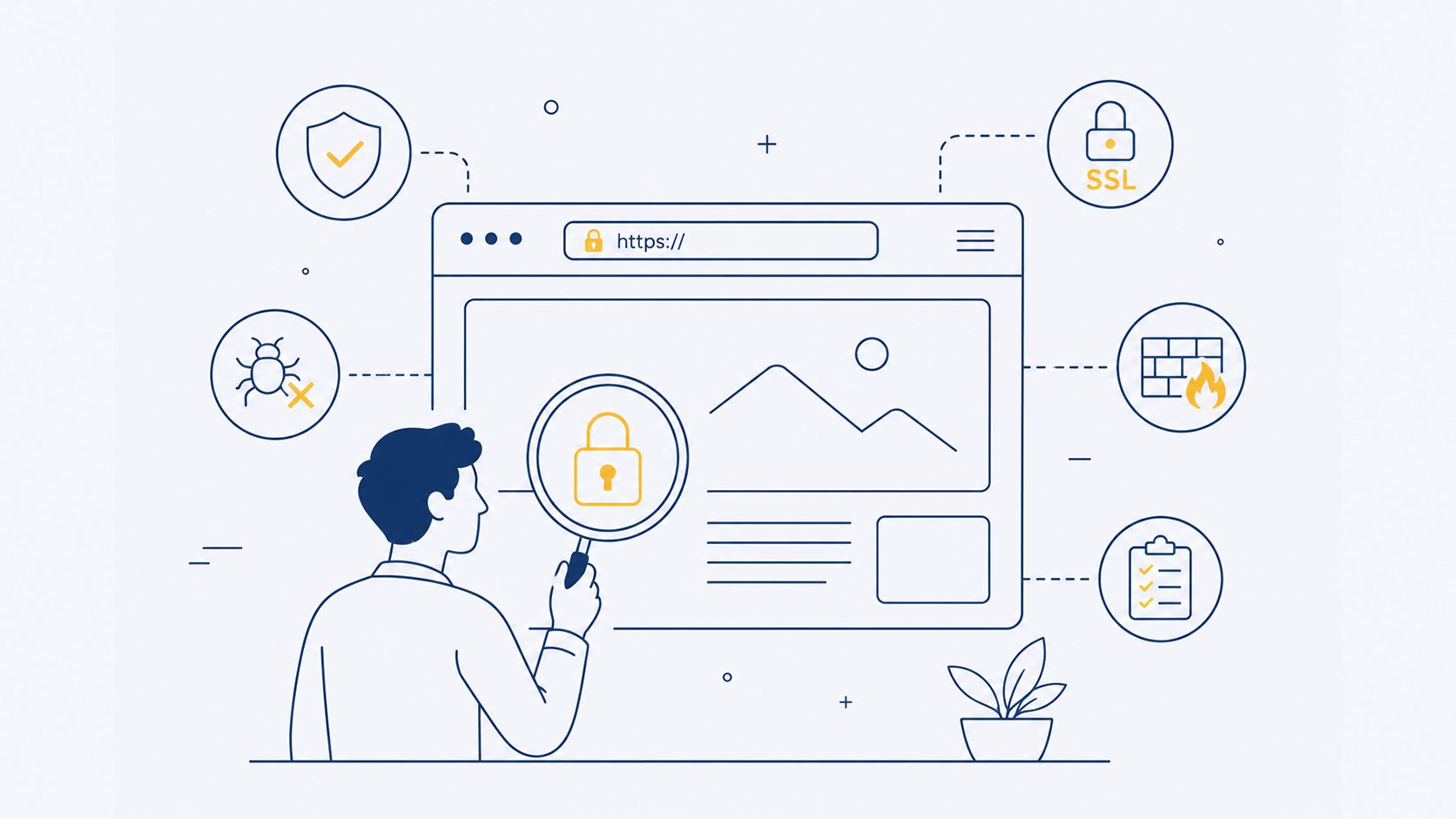
Is Your Website Really Secure? Here's How to Find Out | Senux
Most hacked websites look completely normal. Walk the seven ways in, watch the breach clock run, and run the 12-point inspection on your own site in about twenty minutes.

Your Website Should Be Your Best Employee
Your website works 720 hours a month and never takes leave. Here is the job description, a six-question appraisal you can score right now, and what it really costs.

5 Business Tasks You Should Never Do Manually Again
Data entry, invoice chasing, booking, reporting and onboarding quietly eat 7.6 hours a week. Here are the 5 tasks to automate first — and how Senux builds it.

You Don't Need an Email Automation Subscription
Email platforms bill you for contacts you already own. Senux builds scheduled sends, trigger sequences and reports into your dashboard — no monthly fee.

Stop Paying Employees to Do Repetitive Tasks
Your team loses about 7.6 hours a week to repetitive work — while you rent 25 subscriptions. Senux builds automation you own outright, with no monthly fees.

If Your Website Is WordPress, You're Missing a Lot
WordPress runs 41.5% of the web — and 13,000 sites are hacked daily, 91% through plugins. Here's what that really costs your business, and what Senux builds instead.
Do You Have a Backup for Your Website? If Not, You're at Risk
One bad update, hack, or server failure can erase your website overnight — and 60% of small businesses hit by major data loss close within 6 months. See why a backup isn