Ampla Travels — Run Your Entire Travel Agency From One Platform
An all-in-one travel and tour management platform that unites a marketing website, a passenger self-service portal, an agent dashboard and a 33-module staff admin panel in a single system.

Get This App
Download the guide, request this app for your business, or talk to us about a sale or customization.
Multi-Platform Views
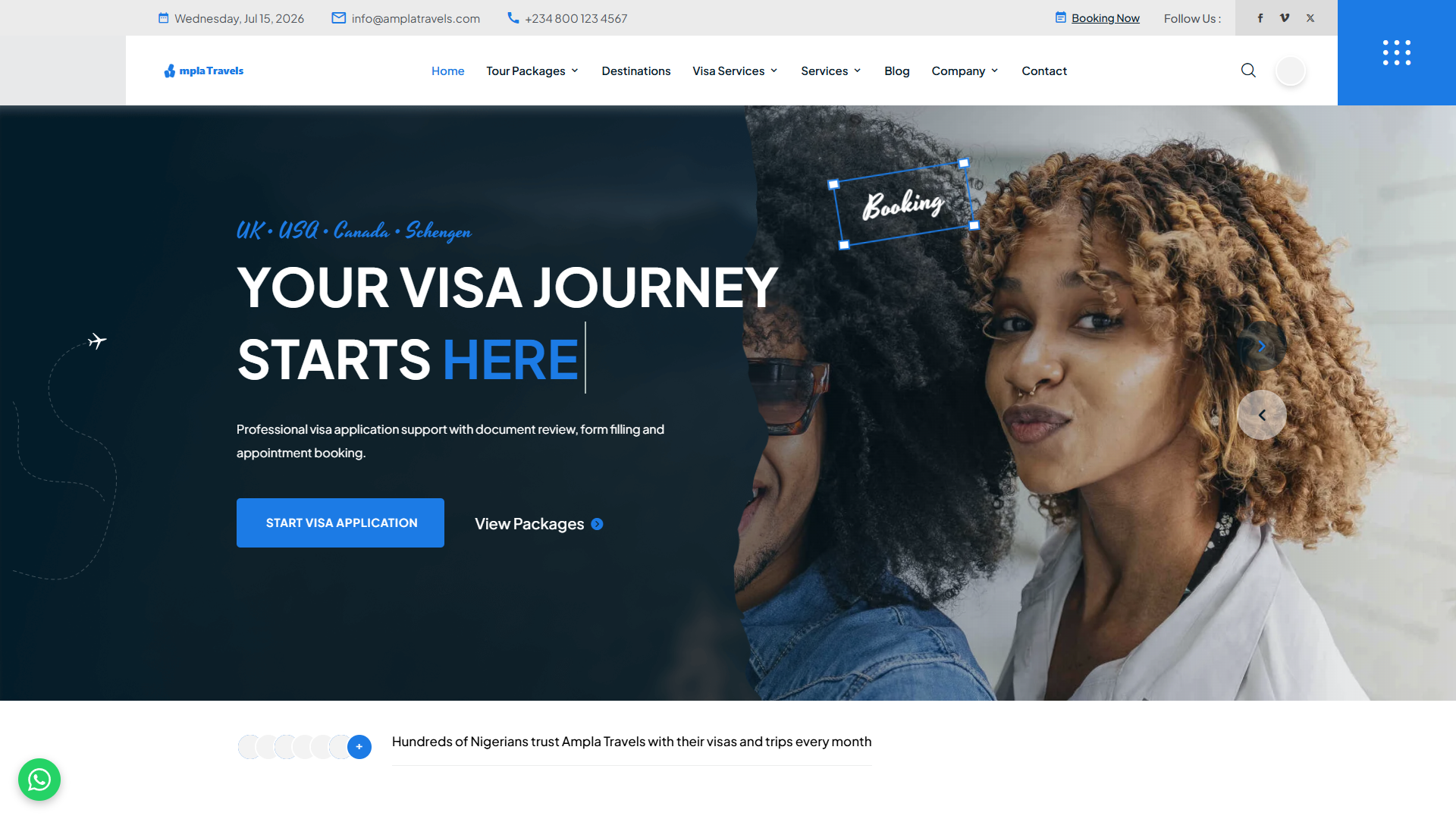
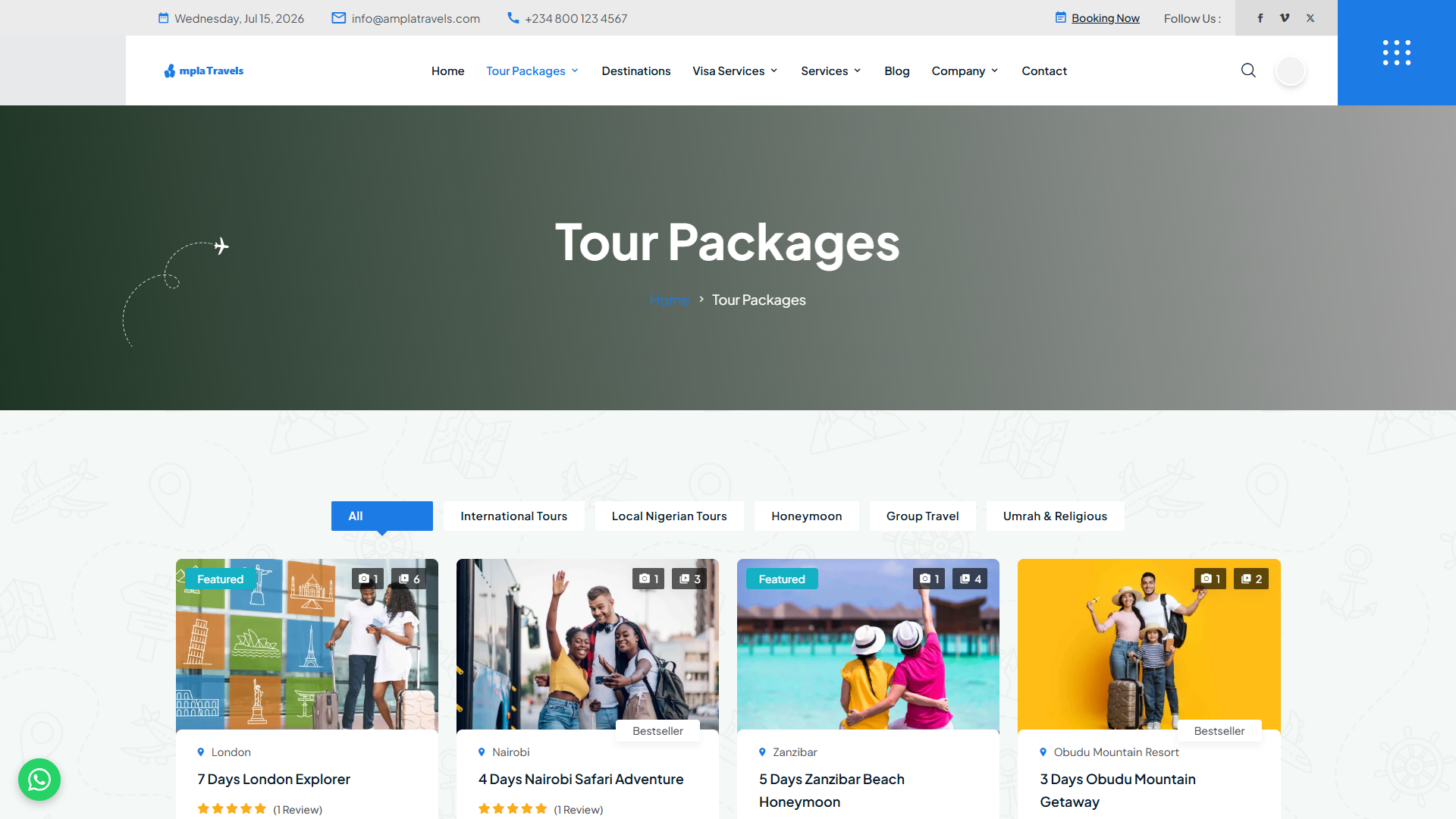
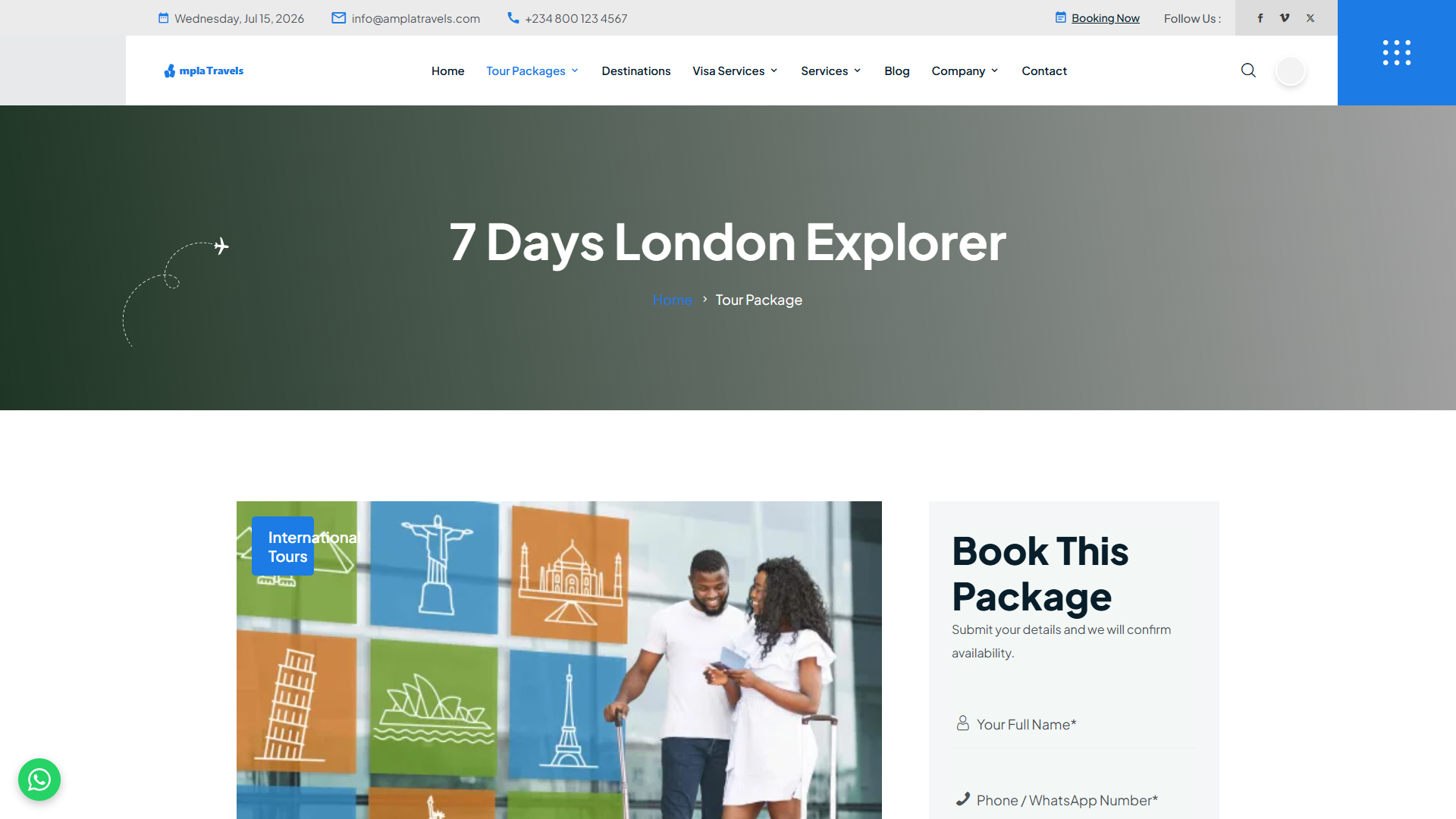
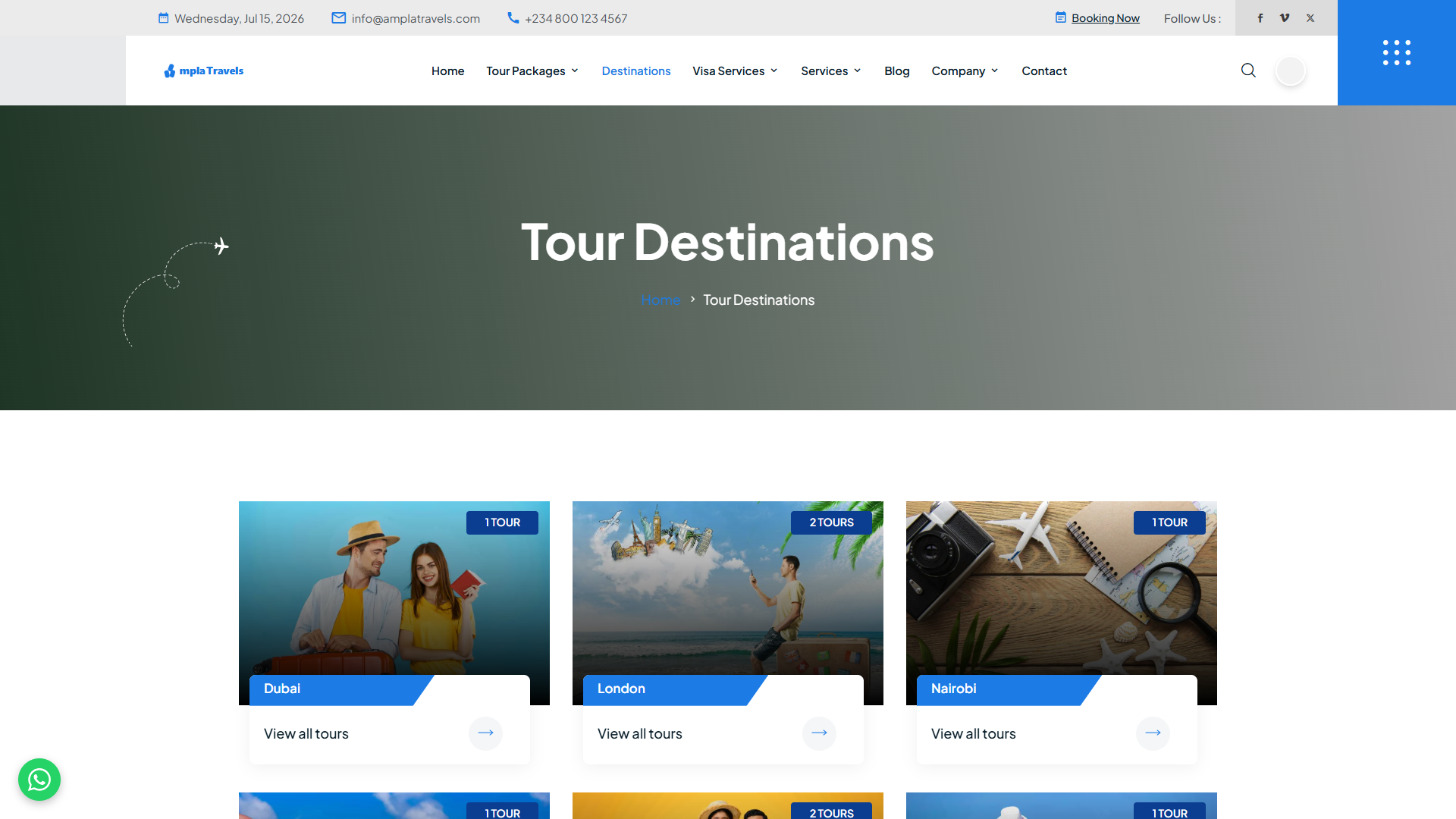
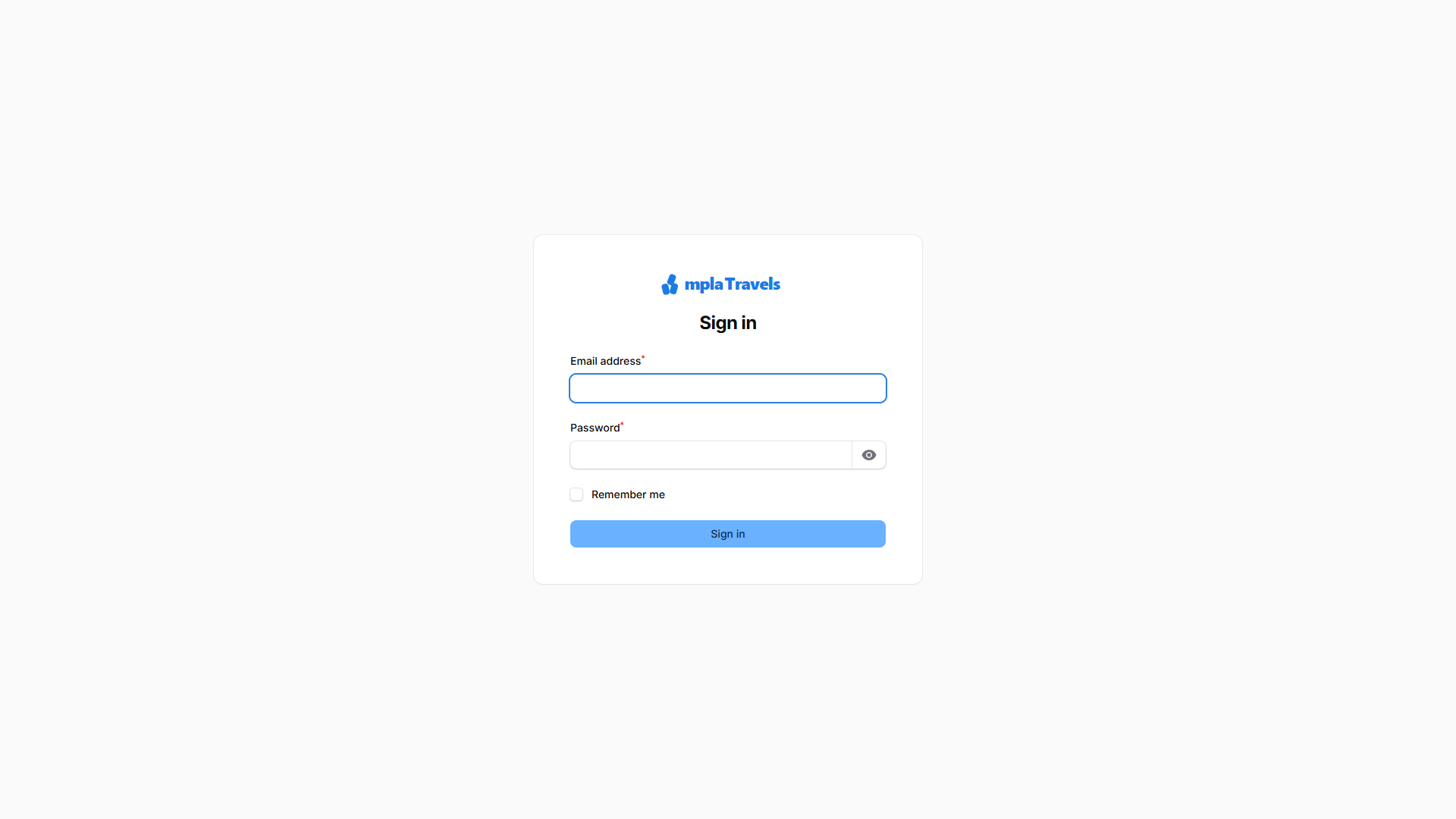
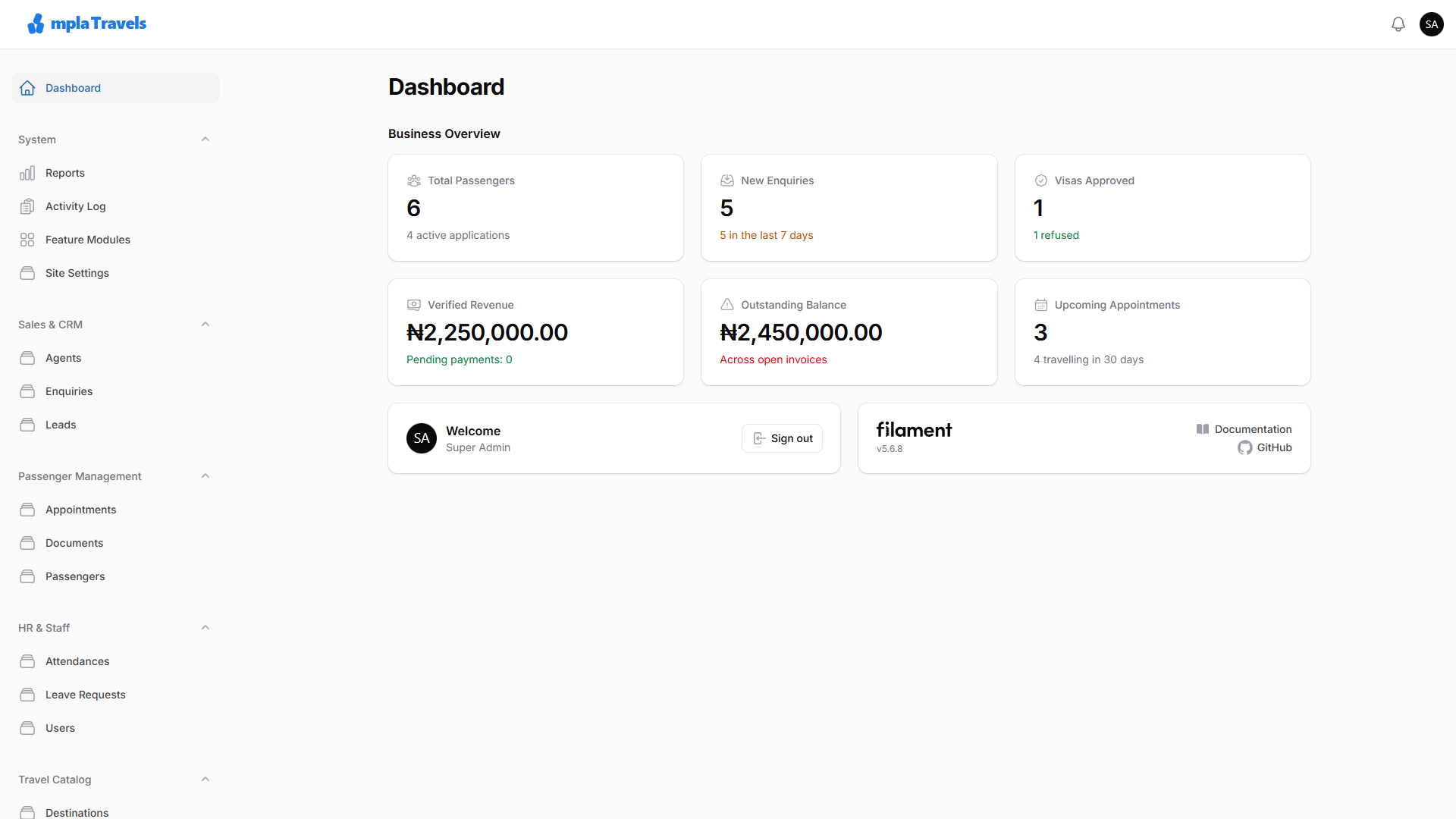
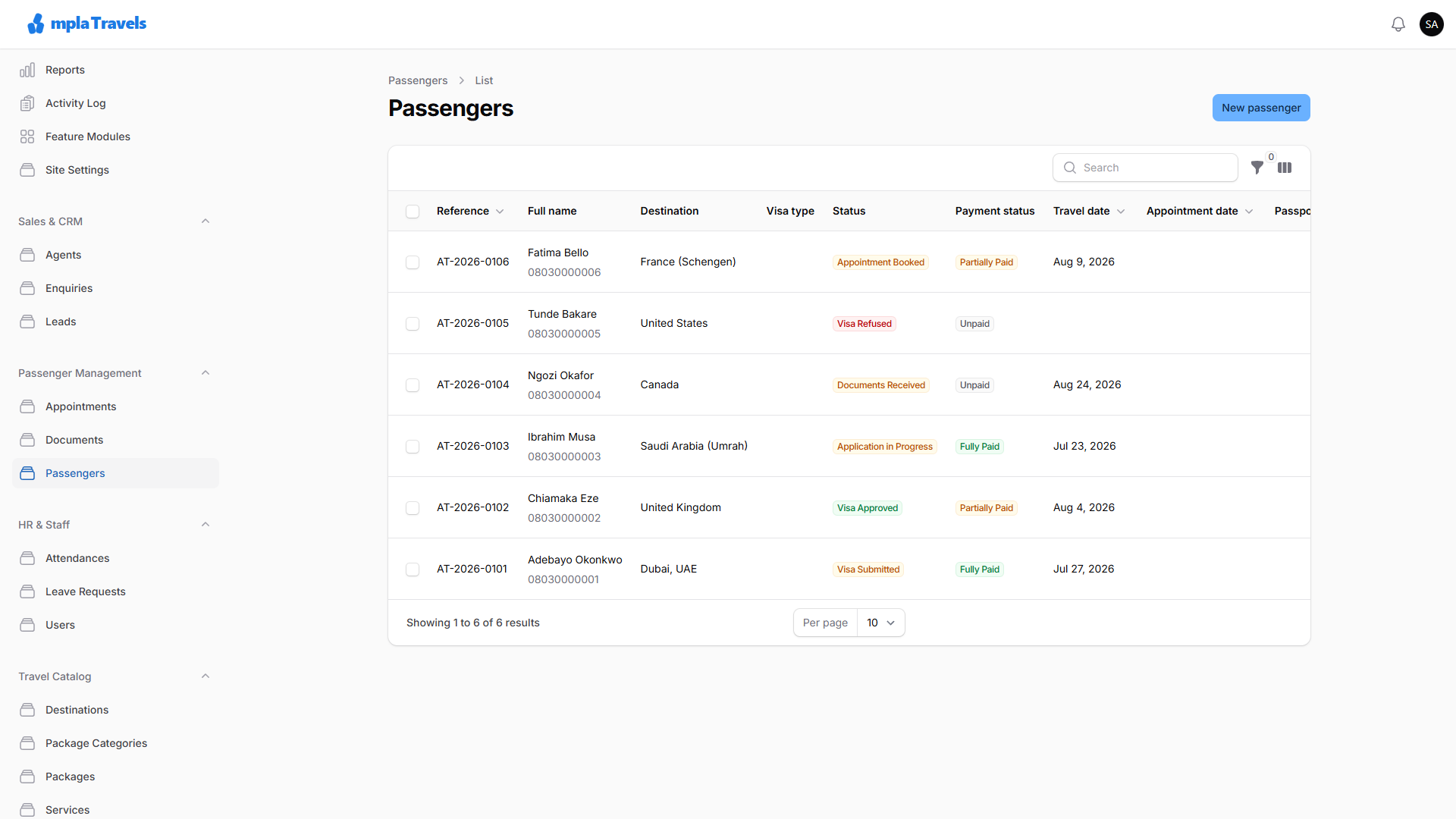
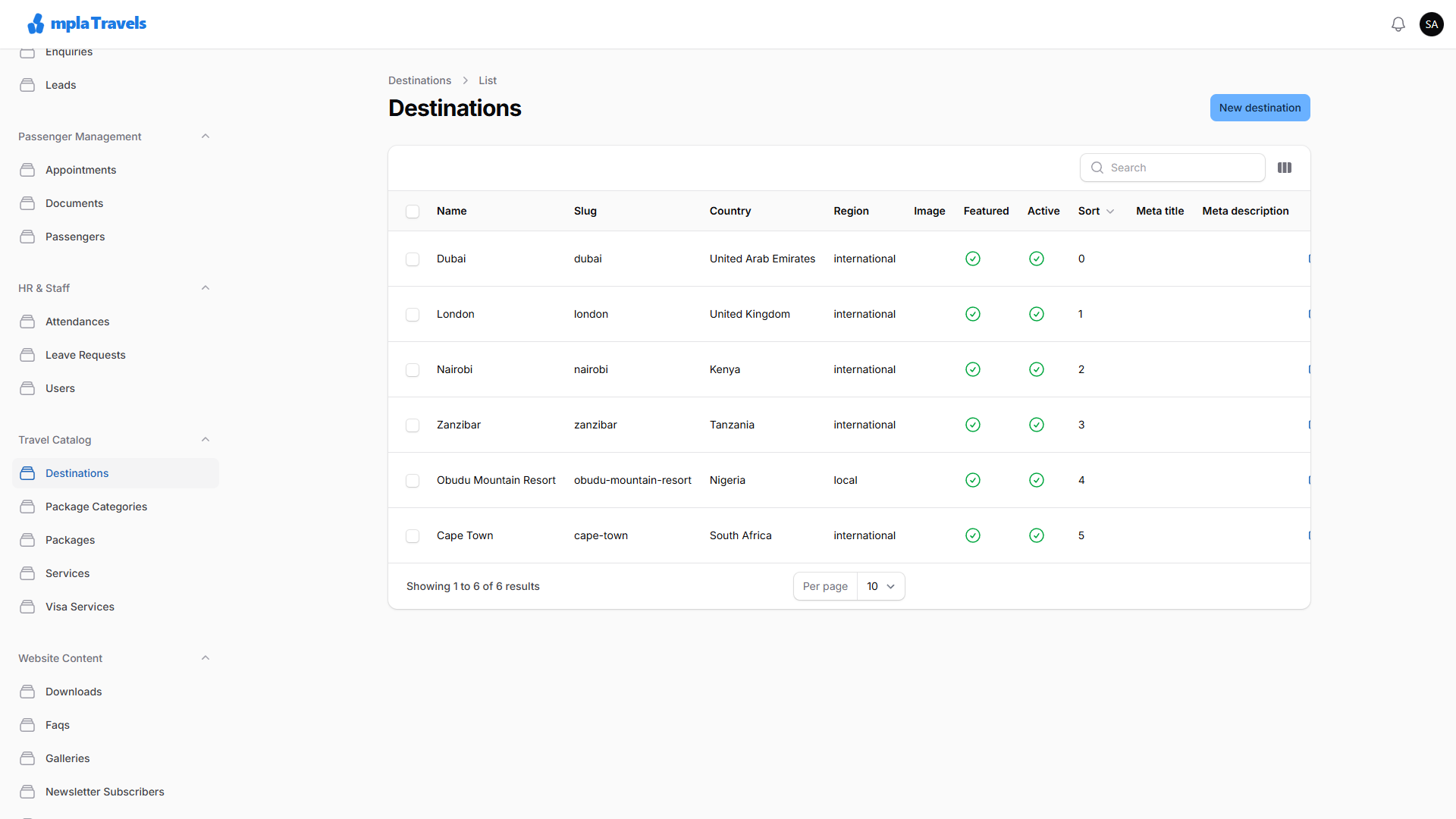
About This App
Ampla Travels is a complete management platform for travel and tour agencies. It replaces the familiar patchwork of spreadsheets, chat apps and manual paperwork with a single, role-based system that spans the entire customer journey — from browsing a holiday package on the public website, through enquiry and booking, to invoicing, online payment, document collection and trip management.
It is built for travel agencies, tour operators and visa-processing businesses that want to run their marketing, sales, customer management and finances from one place rather than juggling spreadsheets, WhatsApp and manual paperwork. The platform is Nigeria-focused and multi-currency ready, with payment and messaging integrations chosen to suit that market.
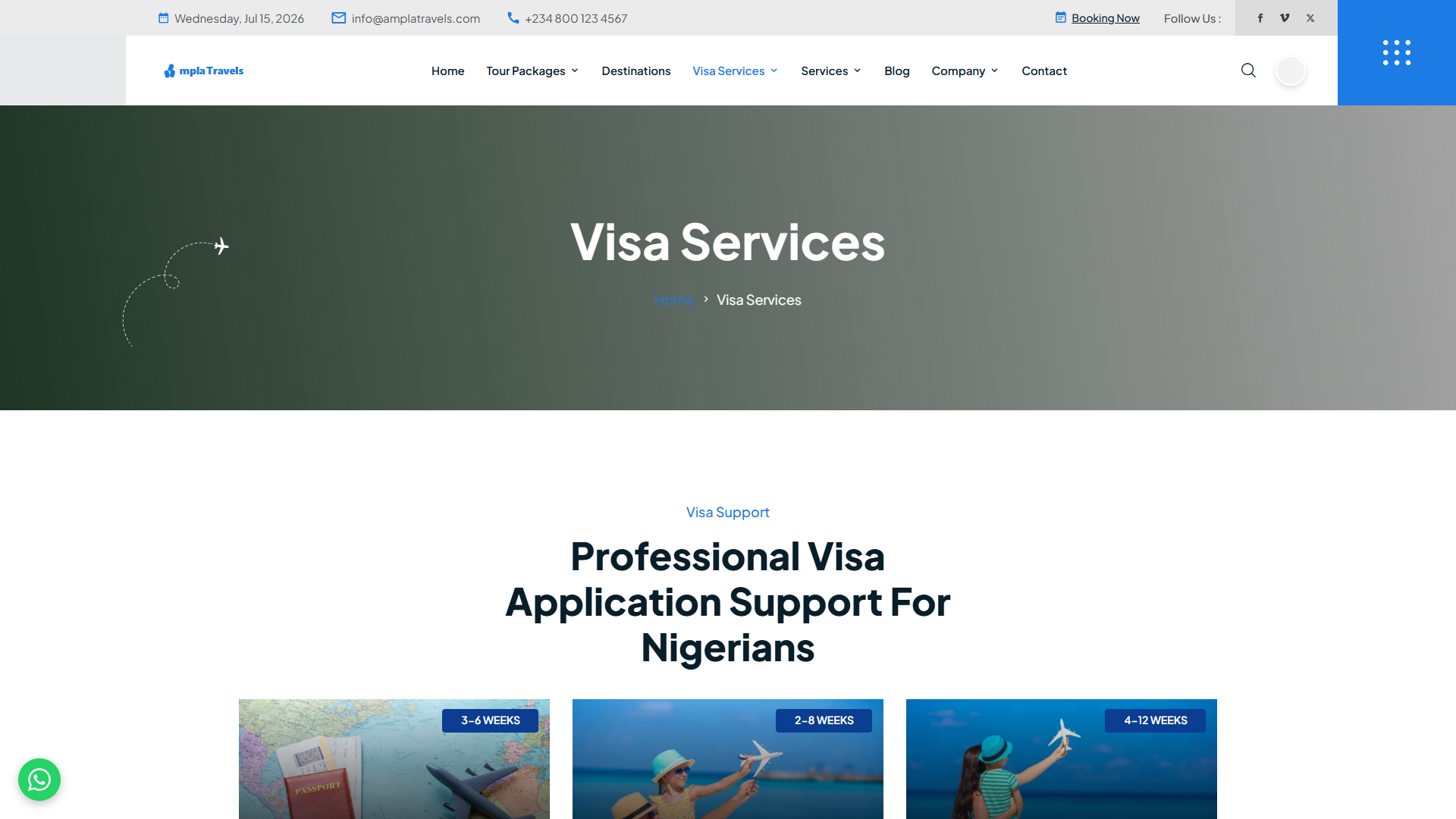
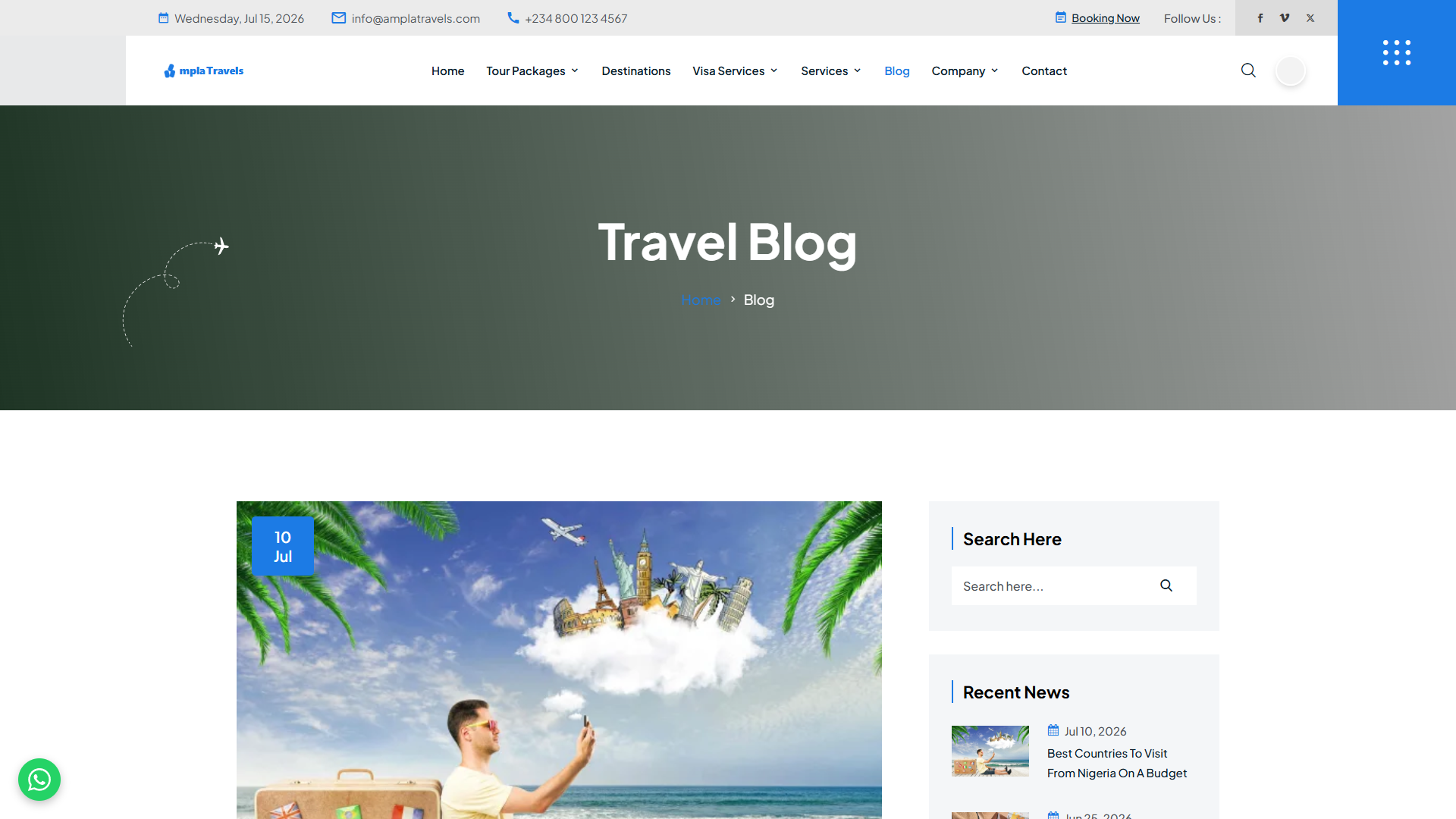
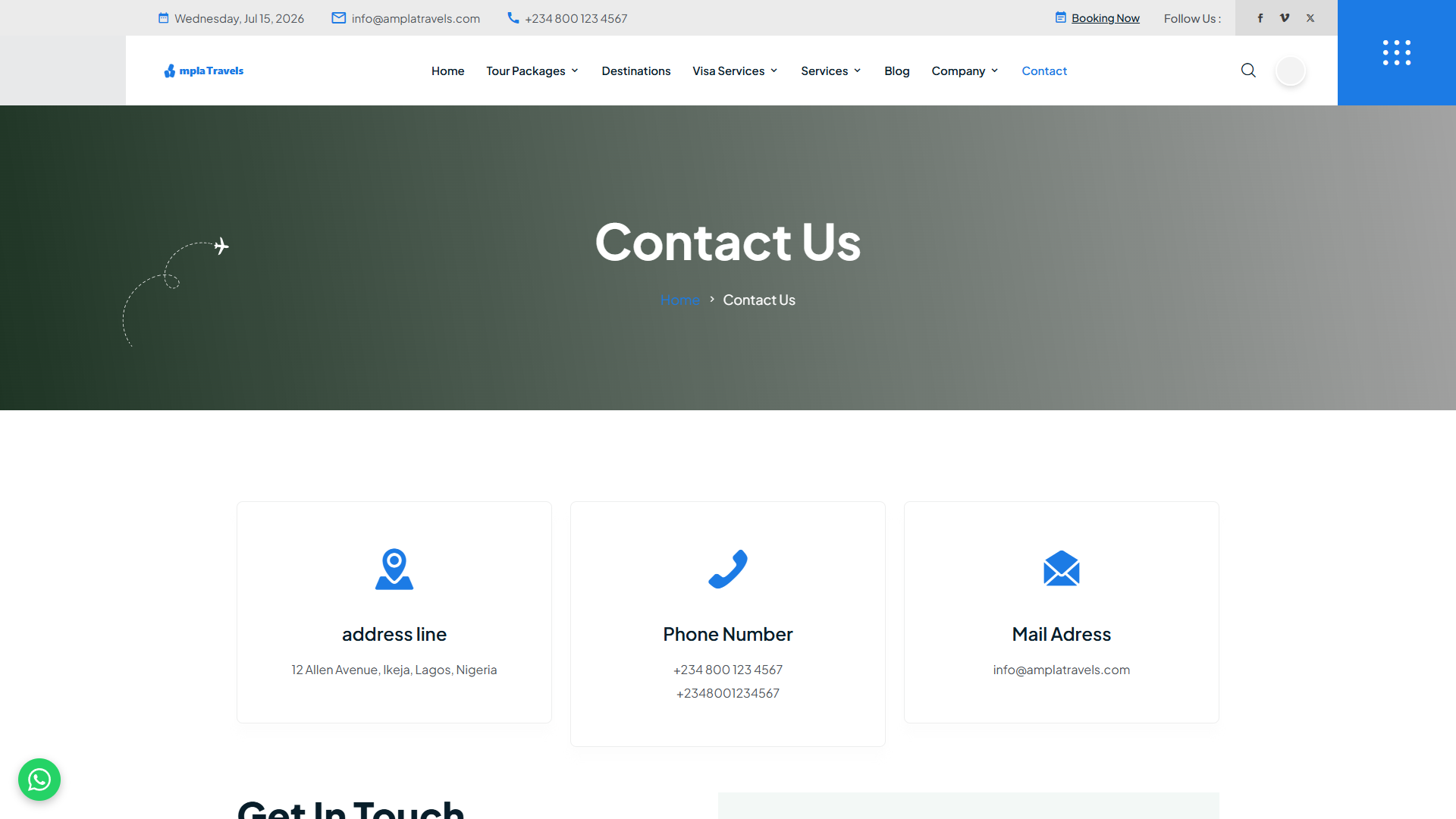
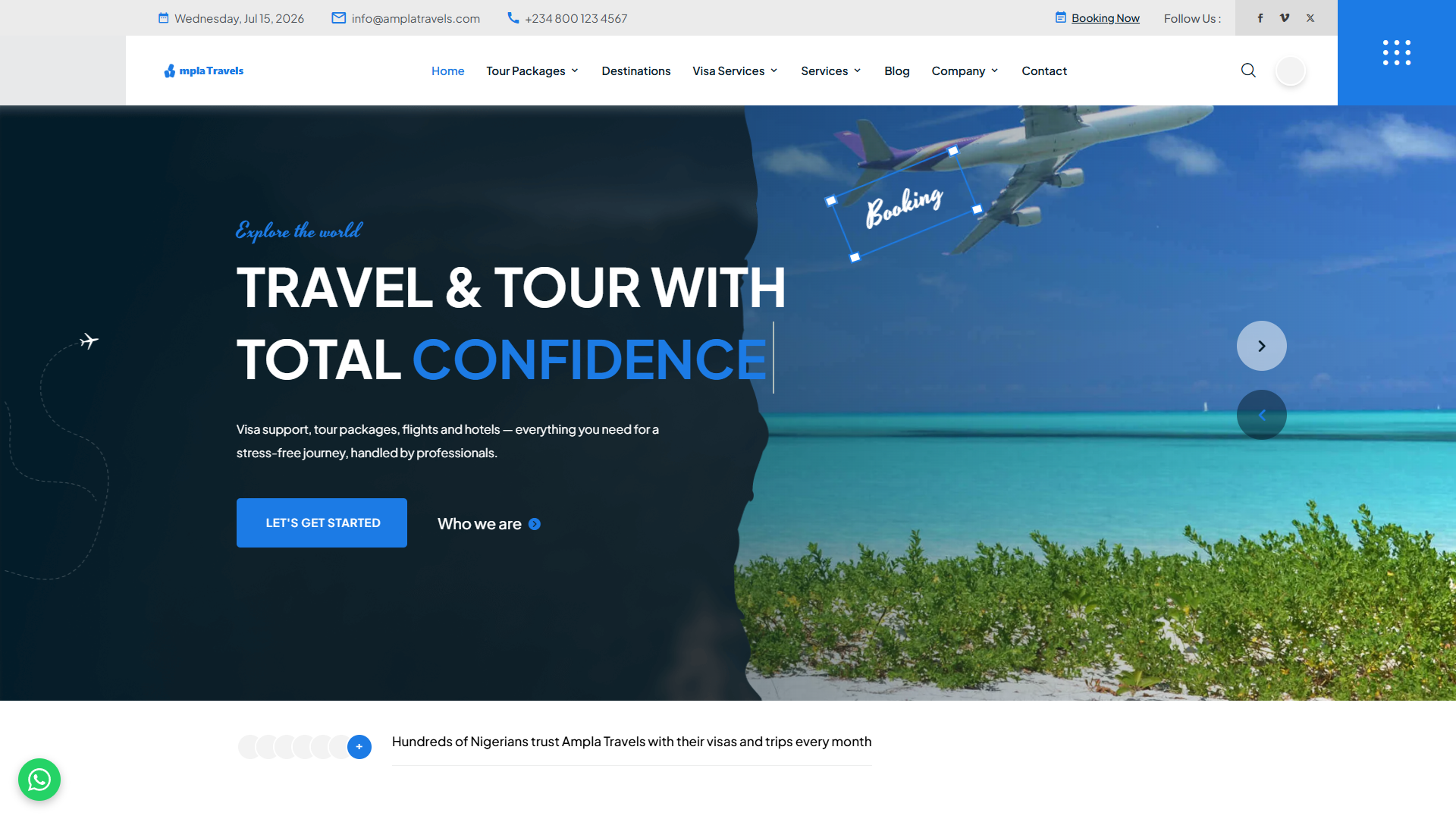
The system is organised into four distinct surfaces, each serving its own audience. The Public Website showcases packages, destinations, visa services and blog content to prospective customers and captures leads. The Passenger Portal lets customers track their applications, upload documents, message staff and pay online. The Agent Dashboard gives partner agents a view of their referred customers and commission earnings. The Admin Panel gives agency staff control of the whole business across 33 feature modules.
The capability set is deliberately broad. The catalogue covers tour packages with itineraries, categories and package-specific FAQs, alongside destinations, visa services and general agency services. The CRM handles leads, enquiries and staged follow-ups with staff assignment. Passenger management is the heart of operations, carrying each customer's full profile, travel status, assigned staff or agent, secure documents, appointments, itineraries, invoices, payments and message history. Finance covers itemised invoicing, payment recording and verification, online checkout through Paystack and Flutterwave, a general transactions ledger and seven report types. Agents are managed with per-agent commission tracking derived from verified payments.
Content is fully editable without code. A section-driven homepage lets every block — hero, about, counters, calls to action — be edited from the admin panel, alongside standalone CMS pages, a blog with categories, sliders, gallery, testimonials, team members, partners, FAQs, downloads and newsletter subscribers. Branding, contact details, SEO and homepage content all live in central Settings, so an agency can make the site its own without touching a template.
A signature capability is the feature-module system: every major capability is a toggleable module that can be turned on or off for a given business from a single screen, with disabled features disappearing from navigation entirely. Combined with ten roles and fail-closed, per-area authorisation, this lets one codebase be tailored precisely to what each agency actually needs and to who inside it should see what.
Rounding out the platform are notifications across email, in-app and SMS via Termii for enquiries, status changes and payments; printable invoices, receipts and passenger files; a full activity log with login tracking; and light operations and HR tooling covering staff profiles, attendance, leave requests and internal project and task tracking. The public website and portal are responsive Blade and Tailwind interfaces built on the Vitour template, with WhatsApp click-to-chat deep links for direct customer contact.
How It Works
1. Configure the agency — Staff sign in to the admin panel at /admin, set branding, contact details, SEO, payment and SMS keys in Settings, and enable only the feature modules the business needs.
2. Build the catalogue — Add tour packages with pricing, galleries, itineraries, categories and FAQs, plus destinations, visa services and general agency services, all published straight to the public website.
3. Attract and capture — Visitors browse packages, destinations, visa services and the blog on the public site, then submit contact, package or visa enquiry forms; sales staff are alerted by email and in-app notification.
4. Work the pipeline — Enquiries are triaged and leads progress through staged follow-ups with staff assignment, before being converted into passengers.
5. Manage the passenger — Each passenger record carries status tracking, assigned staff or referring agent, requested documents, appointments, itineraries and a message history, with notifications fired on status change.
6. Invoice and collect — Staff raise itemised invoices against passengers; customers pay online via Paystack or Flutterwave, or payments are recorded manually as bank transfer, cash or POS, with invoice balance and status recomputed from verified payments.
7. Verify and confirm — Signature-verified gateway webhooks record the payment authoritatively even if the customer abandons the browser redirect, and the passenger is notified automatically.
8. Self-serve in the portal — Passengers register at /sign-up, verify their email, then track their trip, upload documents, message staff and pay from the portal dashboard.
9. Reconcile and report — Agents view referred customers and commission earnings on their own dashboard, while staff run the seven report types, print invoices, receipts and passenger files, and review the activity log for a full audit trail.
Let's Build Your Business Solution
Transform your operational efficiency with SENUX. Our experts are ready to map your requirements to a powerful architecture.
Frequently Asked Questions
What exactly does Ampla Travels cover?+
It is an all-in-one management platform for travel and tour agencies, spanning four surfaces from one codebase: a public marketing website, a passenger self-service portal, an agent dashboard, and a staff admin panel with 33 feature modules. It handles the whole journey from a visitor browsing a package, through enquiry and booking, to invoicing, online payment, document collection and trip management.
Who is it built for?+
Travel agencies, tour operators and visa-processing businesses that want to run their marketing, sales, customer management and finances from one place instead of juggling spreadsheets, WhatsApp and manual paperwork. It is Nigeria-focused and multi-currency ready.
Can we switch off the parts of the system we do not need?+
Yes. Every major capability is a toggleable feature module, enabled or disabled from a single screen at Admin → Feature Modules. Disabled features return 404 on their routes and disappear from the admin navigation entirely, so a single codebase can be tailored to exactly what your agency needs.
How is access controlled between different staff members?+
Authorization uses spatie/laravel-permission with 10 roles — Super Admin, Manager, Travel Consultant, Visa Officer, Accountant, HR Officer, Content Manager, Customer Support, Agent and Passenger. A role_can($area) helper maps functional areas (website, catalogue, sales, passengers, finance, teamwork, hr, system) to allowed roles and is fail-closed: Super Admin is always allowed and unknown areas are denied. Every Filament resource applies canAccess(), and print and report controllers re-check permissions server-side.
Which payment methods can customers use?+
Customers can pay online by card or transfer through Paystack or Flutterwave from the portal, and staff can also record payments manually as bank transfer, cash or POS. Recording a payment automatically updates the linked invoice balance and notifies the passenger.
How reliable is payment recording if a customer closes their browser mid-payment?+
Signature-verified webhooks from Paystack and Flutterwave are the authoritative record and fire even if the customer abandons the browser redirect. All recording is centralised in Payment::recordVerified(), which is idempotent per reference, so a payment can never be double-counted.
Can we edit the website content ourselves without a developer?+
Yes. The homepage is section-driven, so every block — hero, about, counters, calls to action — plus inner-page intros is editable from the admin panel. Alongside that you can manage CMS pages, blog posts, sliders, gallery, testimonials, team members, partners, FAQs and downloads. Site name, logo, contact details, SEO and homepage content all live in Admin → Settings.
What can customers do for themselves in the passenger portal?+
Passengers register at /sign-up, verify their email address, and can then track their application status, upload requested documents, message staff and pay their invoices online. Email verification is required — a passenger is only linked to their operations record once the address is verified, which closes an account-takeover path.
How do partner agents fit in?+
Agents are managed in the admin panel, linked to the passengers they refer, and given a commission rate. They log in to their own self-service dashboard at /agent/dashboard to view their referred customers and commission earnings, with commission derived from verified payments.
What is the technology stack and what does it need to run?+
PHP 8.3 with Laravel 13, Filament 5 for the admin panel, Livewire 4 for reactivity, spatie/laravel-permission for authorization, MySQL 8.4, and a Blade + Tailwind front end on the Vitour template bundled with Vite. It requires PHP 8.3+ with the standard extensions, MySQL 8.0+ (or MariaDB 10.6+), Composer 2.x, Node.js 20+ for asset builds, and a web server with the document root at public/.
Request This App for Your Business
Tell us your details and we'll send full information, pricing and next steps shortly.
From our Blog
View all →
AI Won't Replace Your Business — But Your Competitor Using AI Might | Senux
The threat was never the machine. It is the business down the road answering enquiries in under a minute while you sleep. Walk the response-decay track, flip the switchboard, and see the gap in real numbers.

The Hidden Cost of Ignoring Website Maintenance
Website neglect never sends an invoice. Scrub through 24 months of drift, watch the cumulative cost lines cross, and read the six costs that never appear on any bill.
Is Your Website Really Secure? Here's How to Find Out | Senux
Most hacked websites look completely normal. Walk the seven ways in, watch the breach clock run, and run the 12-point inspection on your own site in about twenty minutes.

Your Website Should Be Your Best Employee
Your website works 720 hours a month and never takes leave. Here is the job description, a six-question appraisal you can score right now, and what it really costs.

5 Business Tasks You Should Never Do Manually Again
Data entry, invoice chasing, booking, reporting and onboarding quietly eat 7.6 hours a week. Here are the 5 tasks to automate first — and how Senux builds it.

You Don't Need an Email Automation Subscription
Email platforms bill you for contacts you already own. Senux builds scheduled sends, trigger sequences and reports into your dashboard — no monthly fee.

Stop Paying Employees to Do Repetitive Tasks
Your team loses about 7.6 hours a week to repetitive work — while you rent 25 subscriptions. Senux builds automation you own outright, with no monthly fees.

If Your Website Is WordPress, You're Missing a Lot
WordPress runs 41.5% of the web — and 13,000 sites are hacked daily, 91% through plugins. Here's what that really costs your business, and what Senux builds instead.
Do You Have a Backup for Your Website? If Not, You're at Risk
One bad update, hack, or server failure can erase your website overnight — and 60% of small businesses hit by major data loss close within 6 months. See why a backup isn